

Last Updated on February 19, 2026 1:13 pm by BIZNAMA NEWS
Franco-Indian AI Collaboration in Health: A New Strategic Axis Beyond Washington and Beijing
By TN Ashok.
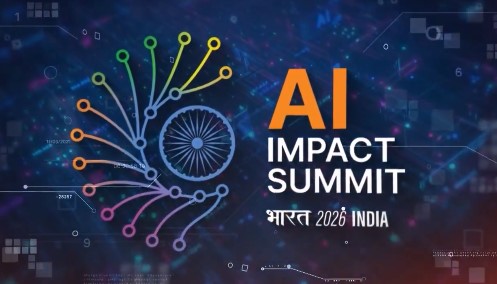
Artificial intelligence is reshaping nearly every sector of modern life, but nowhere is its potential more profound than in healthcare. At a recent summit, India and France inaugurated the Franco-Indian Center for Artificial Intelligence in Health, a joint venture between the All India Institute of Medical Sciences (AIIMS) and the Paris Brain Institute.
French President Emmanuel Macron’s personal support for the project underscores its importance—not just as a scientific collaboration, but as a geopolitical statement.
This initiative highlights a growing “strategic axis” between Paris and New Delhi, rooted in a shared philosophy: strategic autonomy. Both nations have long sought to chart independent paths in global affairs, resisting the gravitational pull of the U.S.-China rivalry. For American readers, this development offers a window into how middle powers are shaping the future of technology and global health outside the familiar Washington-Beijing framework.
The Promise of AI in Health
Artificial intelligence in healthcare is not just about futuristic robots or science fiction. It’s about practical, life-saving applications:
- Diagnostics: AI can analyze medical images faster and more accurately than human radiologists in some cases, spotting early signs of cancer or neurological disorders.
- Drug Discovery: Machine learning accelerates the identification of promising compounds, cutting years off traditional research timelines.
- Personalized Medicine: Algorithms can tailor treatments to individual genetic profiles, improving outcomes and reducing side effects.
- Public Health: AI models can predict disease outbreaks, optimize hospital resource allocation, and even assist in pandemic response.
By combining India’s vast patient base and medical expertise with France’s cutting-edge neuroscience research, the new center aims to push these boundaries further. For example, AIIMS brings unparalleled access to diverse clinical data, while the Paris Brain Institute contributes world-class research in neurology and cognitive science. Together, they create a synergy that could redefine how we understand and treat brain-related illnesses.
Why India and France?
The partnership is not accidental. India and France share a long history of cooperation, from defense to space exploration. But their alignment in AI and health reflects deeper strategic choices:
- India’s Strengths: With its large population and rapidly digitizing healthcare system, India offers a unique testing ground for AI applications. Its doctors and hospitals face immense patient loads, making efficiency gains from AI especially valuable.
- France’s Expertise: France has invested heavily in neuroscience and AI research. The Paris Brain Institute is among Europe’s leading centers, with breakthroughs in understanding Alzheimer’s, Parkinson’s, and epilepsy.
- Shared Values: Both nations emphasize independence in global affairs. They are wary of over-reliance on American tech giants or Chinese state-backed platforms. By collaborating, they reinforce each other’s ability to innovate outside those spheres.
This is what Macron refers to as a “strategic axis”—a partnership that is not merely transactional but rooted in a shared worldview.
Strategic Autonomy: Beyond the U.S.-China Binary
For decades, global technology debates have been framed as a contest between the United States and China. Washington champions Silicon Valley’s private-sector innovation, while Beijing pushes state-driven AI development. But many countries, including India and France, are carving out a third path.
- France’s Approach: Macron has consistently argued for European “strategic autonomy,” meaning Europe should not be dependent on either Washington or Beijing for critical technologies.
- India’s Approach: India, too, has emphasized self-reliance, especially under its “Digital India” and “Atmanirbhar Bharat” (self-reliant India) initiatives. It seeks partnerships that enhance its capabilities without locking it into one camp.
By joining forces, Paris and New Delhi signal that the future of AI will not be dictated solely by the two superpowers. Instead, middle powers can collaborate to create alternative hubs of innovation.
Implications for Global Health
For American readers, the most immediate impact of this partnership lies in global health. Consider these possibilities:
- Brain Disorders: Neurological diseases are among the fastest-growing health challenges worldwide. AI-driven research at the new center could lead to earlier detection and better treatments, benefiting patients everywhere.
- Affordable Solutions: India’s healthcare innovations often focus on cost-effective solutions, given its resource constraints. When combined with French research, these solutions could be scaled globally, offering affordable care in both developing and developed nations.
- Data Diversity: AI models are only as good as the data they are trained on. By incorporating patient data from India, researchers can build more inclusive algorithms that work across diverse populations—something U.S.-centric datasets often lack.
In short, this collaboration could produce breakthroughs that ripple far beyond India and France, reshaping how healthcare systems worldwide—including in the U.S.—deploy AI.
Geopolitical Dimensions
The inauguration of the Franco-Indian AI center is not just about science—it’s also about geopolitics. Macron’s presence at the launch sends a clear signal: France sees India as a critical partner in shaping the future of technology and global governance.
- Counterbalancing Superpowers: By deepening ties, Paris and New Delhi strengthen their ability to resist pressure from Washington or Beijing.
- Expanding Influence: Both nations can project soft power through health innovation, positioning themselves as leaders in ethical AI development.
- Building Coalitions: This partnership may inspire other countries—such as Japan, Germany, or Brazil—to pursue similar collaborations, creating a network of middle-power alliances.
For the U.S., this is a reminder that global leadership in AI and health will not be uncontested. American policymakers may need to engage more actively with such initiatives to ensure alignment on standards, ethics, and interoperability.
Challenges Ahead
Of course, the road ahead is not without obstacles:
- Data Privacy: Sharing medical data across borders raises questions about patient consent and data protection.
- Regulatory Differences: India and France have different healthcare systems and regulatory frameworks, which could complicate collaboration.
- Resource Constraints: AI research requires significant investment in computing power and talent. Sustaining the center will demand long-term commitment.
Yet these challenges are not insurmountable. In fact, tackling them together may strengthen the partnership, forcing both nations to innovate not just technologically but institutionally.
Why This Matters for U.S. Readers
For readers in the United States, the Franco-Indian AI initiative offers several takeaways:
- Global Innovation Is Decentralizing: The U.S. and China are no longer the only players. Middle powers are asserting themselves, creating new centers of excellence.
- Healthcare Is a Strategic Arena: AI in health is not just about better medicine—it’s about national power, influence, and independence.
- Opportunities for Collaboration: American researchers, companies, and policymakers may find fertile ground for cooperation with these initiatives, especially in areas like brain health, ethics, and global data diversity.
In other words, what happens in Paris and New Delhi will not stay there. It will shape the trajectory of AI in health worldwide, including in the U.S.
Conclusion: A New Axis of Innovation
The inauguration of the Franco-Indian Center for Artificial Intelligence in Health is more than a scientific milestone. It is a declaration of intent: India and France are building a strategic axis that champions autonomy, innovation, and global health.
For American readers, this is a story worth watching closely. It illustrates how nations outside the U.S.-China binary are shaping the future of technology, and how their choices will affect healthcare, geopolitics, and innovation worldwide.
As AI continues to transform medicine, the question is not whether the U.S. or China will dominate—but how a diverse set of nations, working together, can ensure that technology serves humanity as a whole. In that vision, the Franco-Indian partnership is a powerful step forward.