
By Andalib Akhter
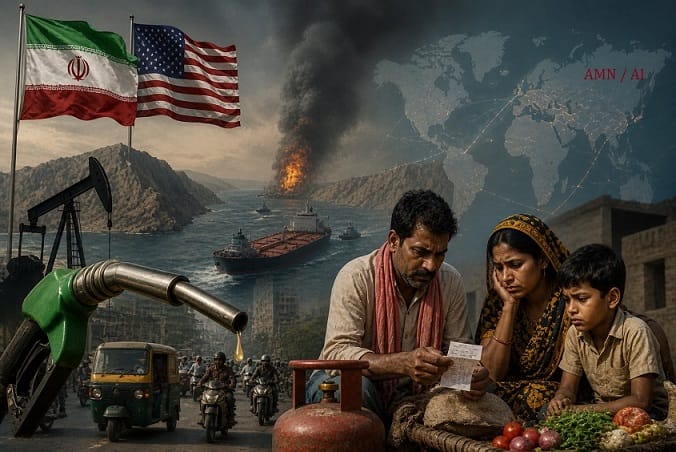
The escalating conflict in the Middle East has triggered a far-reaching economic and humanitarian crisis, with the disruption of the Strait of Hormuz sending shockwaves across global energy markets, food supply chains, and aid operations. As tensions between Iran and the United States intensify, the fallout is being felt far beyond the battlefield—reaching vulnerable populations worldwide and placing a growing burden on countries like India, where rising fuel prices are squeezing the common man.
The crisis began in late February 2026, when military strikes involving Iran, Israel, and the United States rapidly destabilized the Gulf region. At the heart of the disruption lies the Strait of Hormuz, a narrow but critical maritime passage through which nearly one-third of the world’s seaborne oil supply flows. With shipping routes threatened and insurance costs surging, oil and gas supplies have been severely affected, triggering a spike in global fuel prices.
For India, which relies heavily on imported crude oil, the impact has been immediate and significant. Petrol and diesel prices have risen sharply, pushing up transportation costs across the country. This, in turn, has led to an increase in the prices of essential goods—from vegetables and grains to milk and cooking oil—placing additional strain on household budgets. For low-income families, already grappling with inflation, the surge in fuel costs has translated into difficult choices between basic necessities.
Economists warn that fuel price hikes have a cascading effect on the broader economy. As logistics and production costs rise, businesses pass on the burden to consumers, further fueling inflation. In rural India, where incomes are often unstable and heavily dependent on agriculture, the impact is particularly severe. Farmers face higher input costs, including fuel and fertilizers, while consumers struggle with rising food prices.
Meanwhile, the United Nations has raised alarm over the humanitarian consequences of the crisis. Aid agencies report that disruptions in maritime routes have made it increasingly difficult to deliver food, medical supplies, and other essential aid to conflict zones and vulnerable regions. Supplies that once moved efficiently by sea are now being rerouted through longer and more expensive land corridors, significantly increasing both delivery times and costs.
According to UN agencies, shipping and logistics costs for humanitarian aid have risen by an average of 18 percent, with some routes experiencing a doubling of expenses. For instance, aid shipments from Gulf hubs to countries such as Sudan and Chad have become far more costly, limiting the scale and speed of relief efforts. In East Africa, rising fuel prices have also affected the availability of trucks needed to transport emergency supplies from regional warehouses in Kenya to crisis-hit areas like Ethiopia, the Democratic Republic of Congo, and South Sudan.
The disruption of fertilizer shipments through the Strait of Hormuz has added another layer of concern. Reduced availability of fertilizers could impact agricultural production globally, potentially leading to further increases in food prices in the coming months. For developing countries, this raises the specter of worsening food insecurity and hunger.
The financial strain on humanitarian operations is also mounting. The United Nations had appealed for $8.5 billion to fund global relief efforts, but only about 23 percent of that amount has been secured so far. This funding gap threatens to derail critical programs aimed at supporting millions of people facing hunger, displacement, and health emergencies.
UN Secretary-General António Guterres has warned that the ongoing crisis could push millions more into poverty, exacerbate global hunger, and slow down economic recovery worldwide. He emphasized the urgent need for coordinated international action to stabilize supply chains, ensure the flow of essential goods, and support humanitarian agencies.
Back in India, the crisis underscores the country’s vulnerability to global energy shocks. While short-term measures such as fuel tax adjustments and subsidies may provide some relief, experts argue that long-term solutions lie in reducing dependence on imported fossil fuels. Expanding renewable energy sources like solar and wind power could help shield the economy from future disruptions of this kind.
Ultimately, the Strait of Hormuz crisis serves as a stark reminder of how deeply interconnected the modern world is. A conflict in one region can ripple across continents, affecting everything from global markets to the price of food on a family’s table. For millions of ordinary people—especially in countries like India—the cost of war is not measured in geopolitics, but in the daily struggle to afford life’s most basic necessities.