
Last Updated on May 12, 2026 8:46 pm by BIZNAMA NEWS
Sudhir Kumar
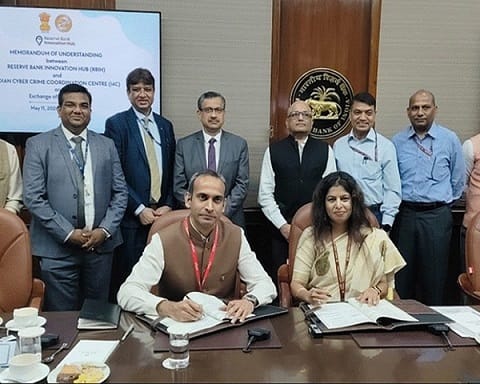
The Indian Cyber Crime Coordination Centre (I4C) has entered into a strategic partnership with the Reserve Bank Innovation Hub (RBIH) to strengthen the fight against cyber-enabled financial frauds. The Memorandum of Understanding (MoU), signed today, focuses on curtailing mule accounts—a persistent challenge in the banking and digital payments ecosystem.
Union Home Minister Amit Shah emphasized that the Narendra Modi government is committed to building a cyber-secure Bharat, but warned that mule accounts remain a major obstacle in curbing online financial crimes. He noted that the collaboration will enhance fraud-risk intelligence sharing, analytical support, and operational coordination, thereby reinforcing proactive fraud detection and prevention mechanisms.
According to the MoU, data from I4C’s Suspect Registry will be integrated into RBIH’s AI-driven fraud detection systems, enabling swift identification and closure of hidden mule accounts. In a social media post, Mr. Shah described the initiative as a “next-gen shield against cyber crime,” designed to protect citizens from evolving digital threats.
Key Highlights
- Strategic Partnership: MoU signed between I4C and RBI Innovation Hub.
- Focus Area: Targeting mule accounts used for cyber fraud.
- Technology Integration: Linking I4C’s Suspect Registry with RBIH’s AI systems.
- Government Commitment: Amit Shah reiterates push for cyber-secure Bharat.
- Citizen Protection: Enhanced fraud detection to safeguard digital transactions.
This move signals a decisive step in India’s broader strategy to secure its financial ecosystem against cyber threats, combining regulatory innovation with advanced technology.