
Last Updated on May 29, 2026 6:19 pm by BIZNAMA NEWS
AMN BENGALURU
While lung cancer remains the most recognized consequence of tobacco use, leading oncologists and public health experts are warning that India is witnessing a dangerous rise in several lesser-known but equally deadly tobacco-related cancers, including cancers of the esophagus, stomach, pancreas, kidney, bladder and liver.
Ahead of World No Tobacco Day, leading cancer specialists from Sammprada Hospital, Bengaluru, spoke about the growing and often underreported burden of tobacco-related cancers in India. They warned that tobacco today is linked to nearly 25–30 different forms of cancer and that cases are increasingly emerging among younger Indians.
Doctors highlighted that after lung cancer, Head & Neck cancers are now among the most common tobacco-related cancers in India, driven by both smoking and smokeless tobacco consumption.
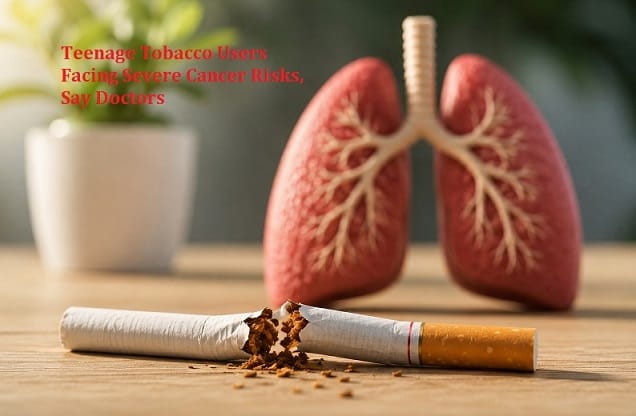
The experts also revealed that they are increasingly witnessing aggressive cancers among very young tobacco users, including a shocking case of a 16-year-old diagnosed with head and neck cancer linked to tobacco exposure.
According to global cancer research, tobacco contributes to nearly one-third of all cancer deaths worldwide and remains one of the largest preventable causes of cancer. India continues to have one of the world’s highest burdens of tobacco use, particularly smokeless tobacco consumption, which significantly increases risks of oral and head & neck cancers.
Speaking on the occasion, Dr. Radheshyam Naik, Founder, Medical Director and Head of Medical Oncology, Haematology & Bone Marrow Transplantation Unit, Sammprada Hospital, Bengaluru, said: “Tobacco is not just about lung cancer anymore. We are witnessing a growing burden of esophageal, pancreatic, bladder, stomach and liver cancers linked directly to tobacco exposure. Many of these cancers are diagnosed late and are extremely aggressive. What is particularly worrying is that patients are now presenting at younger ages because tobacco exposure is beginning earlier in life.”
He added: “We recently treated a teenage patient — just 16 years old — with tobacco-related head and neck cancer. This should serve as a wake-up call for families, schools and policymakers. Tobacco initiation among youth is becoming a serious cancer risk.”
Experts noted that tobacco-induced cancers are often biologically more aggressive and significantly harder to treat.
Dr. Vinod Ramani, Consultant – Cancer Prevention & Preventive Oncology, Sammprada Hospital, Bengaluru, said: “Tobacco users are more likely to experience treatment complications, therapy failure, recurrence and even second cancers. Smoking slows down wound healing after surgery, increases infection risks and reduces the effectiveness of cancer treatment. In many cases, the outcomes are considerably worse compared to non-tobacco-related cancers.”
The experts also emphasized that tobacco damages far more than the lungs. Dr. PS Prabhakaran, Ex Vice Chancellor, RGUHS and Former Director, Kidwai Memorial Institute of Oncology, said: “Tobacco severely affects the heart and blood vessels, increasing the risk of heart attacks, strokes and cerebral complications. When cancer treatment is added to this already damaged system, complications multiply significantly.”
Public health experts warned that misconceptions around “safe limits” of tobacco continue to fuel addiction and delayed diagnosis. Dr. K. Prabhakara Rao, Tobacco Control Expert, said: “There is effectively no safe level of tobacco exposure. The risk depends on how early tobacco use begins, how long a person uses it and the intensity of exposure. The earlier young people start smoking or chewing tobacco, the greater the lifetime cancer risk.”
Doctors also highlighted the growing burden of various tobacco-related cancers in India that often receive limited public attention. These include esophageal cancer, stomach cancer, pancreatic cancer, kidney cancer, bladder cancer, liver cancer, Acute Myeloid Leukemia and Head & Neck cancers
The experts called for stronger public awareness campaigns focused not only on lung cancer but on the broader spectrum of tobacco-linked diseases. They stressed the need for early screening, stronger tobacco control measures and targeted interventions among youth.
“Many patients still believe that if they avoid lung disease, tobacco is somehow manageable. That is dangerously incorrect. Tobacco affects nearly every organ system and is linked to dozens of cancers. Prevention remains our strongest weapon,” Dr. Radheshyam Naik said.