
Last Updated on July 13, 2026 12:06 am by BIZNAMA NEWS
By S. N. Verma

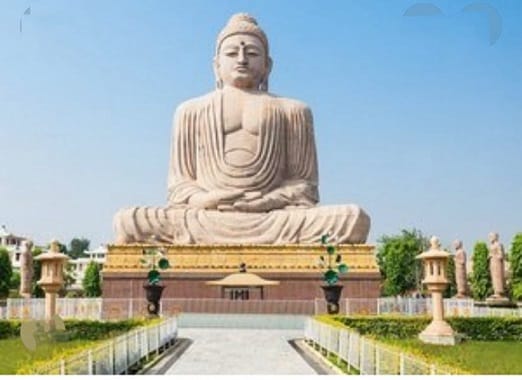
India, the birthplace of Buddhism, is home to some of the world’s most revered Buddhist pilgrimage sites, drawing millions of devotees, scholars and travellers every year. From the sacred Bodhi Tree in Bodh Gaya to the ancient stupas of Sanchi and the serene monasteries of Arunachal Pradesh, the country’s Buddhist heritage forms a vital part of its cultural and spiritual landscape. In recent years, the government has intensified efforts to strengthen tourism infrastructure, improve connectivity and promote these destinations globally.
Among the most significant Buddhist sites are Bodh Gaya in Bihar, where Siddhartha Gautama attained enlightenment; Sarnath in Uttar Pradesh, where he delivered his first sermon; Kushinagar, where he attained Mahaparinirvana; and Sanchi in Madhya Pradesh, renowned for its magnificent Buddhist stupas. Together, these locations form the backbone of India’s Buddhist tourism circuit and attract visitors from across Asia and beyond.
Recognising the growing importance of spiritual tourism, the Ministry of Tourism has approved multiple infrastructure projects under flagship initiatives such as Swadesh Darshan, Swadesh Darshan 2.0, and the Pilgrimage Rejuvenation and Spiritual Heritage Augmentation Drive (PRASHAD). These programmes aim to improve visitor facilities, preserve heritage sites and promote sustainable tourism.
Connectivity has also received considerable attention. Roads, airports and railway links connecting major Buddhist destinations have been upgraded to facilitate easier travel. India has enhanced cross-border connectivity with neighbouring Nepal, including highway links to Lumbini, the birthplace of Lord Buddha. The Indian Railways also operates dedicated Buddhist Circuit tourist trains connecting major pilgrimage destinations such as Bodh Gaya, Rajgir, Nalanda, Sarnath, Kushinagar, Lumbini and Shravasti.
India has also strengthened tourism cooperation with Buddhist-majority countries including Nepal, Bhutan, Sri Lanka and Thailand to promote pilgrimage travel and cultural exchanges.
Beyond the four principal pilgrimage centres, several other locations contribute to India’s rich Buddhist heritage. The Mahabodhi Temple at Bodh Gaya, a UNESCO World Heritage Site, remains one of the holiest shrines in Buddhism. The Dhamekh Stupa at Sarnath commemorates Buddha’s first sermon, while the Mahaparinirvana Temple at Kushinagar marks the place where he attained final liberation. The Great Stupa at Sanchi, another UNESCO World Heritage Site, represents one of the finest surviving examples of ancient Buddhist architecture.
In the Himalayan region, the Tawang Monastery in Arunachal Pradesh is India’s largest Buddhist monastery and an important centre of Mahayana Buddhism. The Dalai Lama Temple Complex in Dharamshala, Himachal Pradesh, serves as a major centre of Tibetan Buddhist learning and culture. Meanwhile, the rock-cut caves of Ajanta and Ellora in Maharashtra continue to fascinate visitors with their remarkable Buddhist murals, sculptures and monastic architecture.
One of the most significant chapters in modern Indian Buddhism is associated with Deekshabhoomi in Nagpur, Maharashtra. The site marks the historic mass conversion led by Dr. B. R. Ambedkar on October 14, 1956, when he embraced Buddhism along with hundreds of thousands of his followers. The event is widely regarded as one of the largest religious conversion movements in modern history and played a pivotal role in reviving Buddhism in India after centuries of decline.
Dr. Ambedkar’s embrace of Buddhism inspired millions of Dalits to adopt the faith as a means of social emancipation and equality. Over the decades, Deekshabhoomi has evolved into one of the country’s most important Buddhist pilgrimage centres and has been accorded ‘A’ category tourism and pilgrimage status by the Maharashtra government.
The Ministry of Tourism continues to promote Buddhist tourism through international travel fairs, roadshows, digital campaigns, familiarisation visits for travel professionals, and support for cultural festivals organised by state governments and Union Territories. These initiatives seek to position India as a premier destination for Buddhist pilgrims and cultural tourists.
Ensuring visitor safety has also become a policy priority. While law and order remain the responsibility of state governments, the Ministry has encouraged states to establish dedicated Tourism Police units. Several states, including Uttar Pradesh, Maharashtra, Kerala, Karnataka, Rajasthan, Goa, Himachal Pradesh and Delhi, have deployed specialised tourism police personnel to assist visitors and enhance security at major tourist destinations.
To further support travellers, the Ministry operates a 24×7 multilingual tourist helpline providing travel assistance and emergency guidance in multiple Indian and international languages. The service is available through the toll-free number 1800-11-1363 and the short code 1363, offering information and support to both domestic and international tourists.
Today, Buddhist tourism has emerged not only as a driver of economic activity but also as a bridge connecting India with the wider Buddhist world. With sustained investments in infrastructure, heritage conservation and international cooperation, India is strengthening its position as the global centre of Buddhist pilgrimage while preserving a spiritual legacy that has shaped civilizations for more than two millennia.
The writer is an independent journalist and columnist