
Calls for simplified registration, protection from harassment and separate rules for small healthcare establishments
AMN / Nagpur
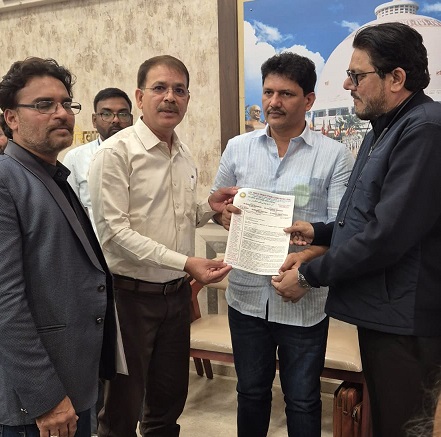
The All India Unani Tibbi Congress (AIUTC) has submitted a set of proposals to the Maharashtra government on the proposed implementation of the Clinical Establishments Act, calling for simplified regulations for small clinics, protection of doctors from unnecessary harassment and adequate representation for Unani and other AYUSH systems in public healthcare institutions.
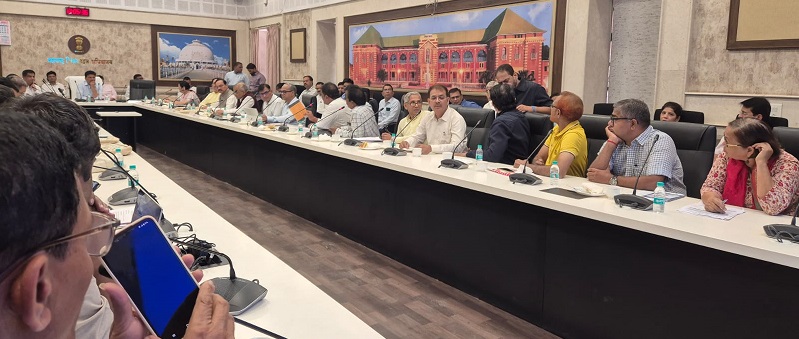
The proposals were presented at an important meeting convened by the Maharashtra government at the Nagpur Assembly under the chairmanship of State Health Minister Prakash Abitkar. Representatives of major medical organisations across Maharashtra were invited to offer their views on the proposed legislation, with the AIUTC representing the Unani system of medicine.
Representing the AIUTC, National Secretary Dr S.M. Yaqub, Vidarbha Zonal Secretary Dr Niazuddin Siddiqui and Nagpur Secretary Dr Intikhab Alam attended the meeting.
Expressing concern over what he described as the continued neglect of the Unani system, Dr Yaqub called for a separate meeting to discuss issues confronting Unani practitioners. He also urged the government to formulate recruitment rules for Unani doctors without further delay and ensure adequate representation of the system in Aapla Dawakhana centres, municipal corporation dispensaries and Zilla Parishad healthcare facilities.
Health Minister Prakash Abitkar assured the delegation that discussions on these issues would be held soon.
The AIUTC had also been invited earlier by the Government of India, through the National Commission for Indian System of Medicine (NCISM), to submit its views on the Clinical Establishments Act. Dr Nadeem Usmani had represented the Maharashtra State unit of the organisation on that occasion.
Key recommendations on Clinical Establishments Act
In its submission to the Maharashtra government, the AIUTC emphasised that the proposed regulatory framework should not impose unnecessary financial and administrative burdens on small practitioners and general physicians.
Among its major recommendations, the organisation called for reconsideration of the need for a new law in view of the existing regulatory provisions. It urged the government to adopt a simplified, risk-based regulatory mechanism for small clinics and general practitioners, with separate and less stringent norms for establishments having zero to five beds.
The organisation also sought lower registration fees and a registration validity of at least five years to reduce the compliance burden on small healthcare providers. It recommended introducing a simplified online single-window registration system to make the process transparent and accessible.
The AIUTC further stressed the need to protect small doctors from unnecessary inspections, harassment and arbitrary action by officials. It called for uniform regulatory provisions for government and private healthcare establishments and adequate safeguards for the professional dignity, rights and security of doctors.
On emergency healthcare, the organisation proposed that doctors providing free emergency services should receive appropriate compensation. It also sought legal protection for practitioners who provide emergency treatment in good faith. The AIUTC argued that minor errors should not invite criminal proceedings and that penalties under the proposed framework should be proportionate to the nature of the violation.
Another recommendation concerned biomedical waste management. The organisation urged the government to provide free or subsidised biomedical waste collection facilities to small general practitioners, who often face difficulties in meeting the associated compliance costs.
Focus on balanced regulation
The AIUTC maintained that the primary objective of the Clinical Establishments Act should be to safeguard patients and improve the quality of healthcare services rather than create additional hurdles for small medical practitioners.
It urged the Maharashtra government to consider the concerns of different systems of medicine, particularly Unani and other AYUSH practitioners, while framing the regulatory framework.
The organisation expressed hope that the state government would examine its recommendations seriously and introduce a transparent, practical and balanced system that protects patients’ interests while ensuring the legitimate rights and professional security of doctors.