

AMN / Kurseong, West Bengal
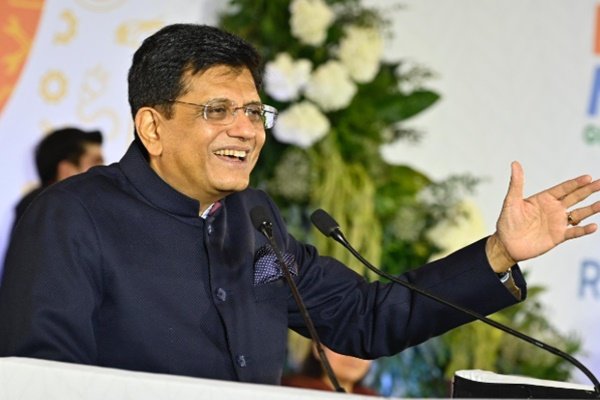
The Indian tea industry received a major policy boost as Union Commerce and Industry Minister Piyush Goyal chaired a high-level meeting with tea sector stakeholders in Kurseong, bringing the spotlight firmly on the future of one of India’s most important plantation industries.
Organised by Tea Board India, the interaction brought together representatives of tea associations, exporters, plantation owners, small tea growers, researchers and government officials to deliberate on the challenges and opportunities facing the sector. Darjeeling MP Raju Bista and Kurseong MLA Sonam Lama were also present.
India’s Tea Exports Near USD 1 Billion
The discussions come at a crucial time for the industry. India remains the world’s largest producer of black tea and the third-largest tea exporter globally. During FY2025-26, the country exported 282.11 million kg of tea valued at USD 988.13 million, highlighting tea’s continued importance to agricultural exports and rural livelihoods.
Officials and industry leaders emphasized the need to capitalise on growing global demand while enhancing India’s competitiveness in international markets.
Darjeeling Tea Revival Tops Agenda
A key focus of the meeting was the revival of the renowned Darjeeling tea industry, which has faced multiple challenges in recent years, including rising production costs, climate-related issues and market pressures.
Stakeholders discussed measures to strengthen the premium tea segment, improve branding and protect the global reputation of Darjeeling tea, often referred to as the “Champagne of Teas.”
Tea Auction System Set for Modernisation
One of the most significant outcomes of the interaction was the push to modernise India’s tea auction mechanism. Participants called for a more efficient, transparent and technology-driven auction system capable of responding quickly to changing market dynamics.
The proposed reforms aim to:
- Improve operational efficiency
- Increase transparency in transactions
- Reduce procedural bottlenecks
- Speed up trade settlements
- Make auctions more responsive to industry needs
Industry representatives noted that a stronger auction ecosystem would benefit growers, traders and exporters alike.
Boosting Exports Through New Market Opportunities
Export promotion emerged as another major area of discussion. Stakeholders urged greater utilisation of opportunities under the Government’s Export Promotion Mission (EPM) to expand India’s footprint in both traditional and emerging tea markets.
Suggestions included:
- Strengthening global branding of Indian tea
- Improving market access in key destinations
- Enhancing export competitiveness
- Conducting targeted promotional campaigns overseas
- Developing coordinated strategies between government and industry
The meeting underscored that higher-value exports will be critical for sustaining growth in the tea sector.
Research and Quality Enhancement in Spotlight
Participants stressed that innovation and scientific research will play a decisive role in improving productivity and maintaining quality standards.
Discussions focused on:
- Strengthening tea research institutions
- Adopting advanced cultivation practices
- Addressing climate and productivity challenges
- Enhancing quality assurance systems
- Extending research services to small tea growers
Industry leaders emphasised that continuous research support would help Indian tea meet the evolving quality expectations of both domestic and international consumers.
Worker Welfare Remains a Priority
The welfare of tea plantation workers, especially women and children, was another key area of focus.
Stakeholders discussed the proposed Pradhan Mantri Cha Shramik Protsahan Yojana (PMCSPY), aimed at improving education, healthcare and living standards for tea worker families in West Bengal.
The initiative is expected to strengthen social security and improve quality of life across tea-growing regions, while supporting the long-term sustainability of the plantation sector.
Ease of Doing Business for Tea Industry
Improving the ease of doing business across the tea value chain also featured prominently in the discussions. Participants called for simpler procedures, faster approvals and reduced compliance burdens to help the industry operate more efficiently.
A Roadmap for Sustainable Growth
The Kurseong meeting highlighted a comprehensive roadmap for the future of Indian tea, centred on Darjeeling revival, export expansion, auction reforms, scientific research, quality enhancement and worker welfare.
With exports approaching the USD 1 billion mark and policymakers signalling stronger support for the sector, industry stakeholders see this as an important opportunity to position Indian tea for sustainable growth and greater global recognition in the years ahead.