Last Updated on January 26, 2026 9:54 pm by BIZNAMA NEWS
SHOBHA SHUKLA – CNS
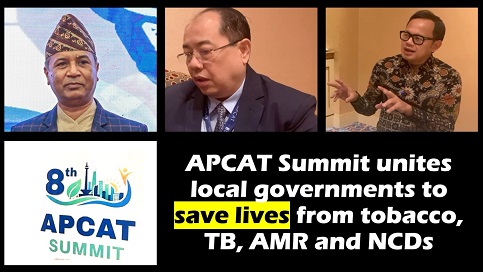
Summit of sub-national government leaders from over 121 cities of 12 countries in Asia and the Pacific region unitedly passed an important declaration in Jakarta, Indonesia to save lives from preventable causes of diseases and untimely deaths, like tobacco use, TB, antimicrobial resistance (AMR) and non-communicable diseases (NCDs).
With less than 5 years left to deliver on the Sustainable Development Goals (adopted by all governments in 2015), it is alarming to note that progress on them is way off the mark. SDG goals and targets (among other political declarations adopted by our governments at the UN) include reducing NCDs by one-third by 2030, implementing the legally-binding global tobacco treaty (formally called as WHO Framework Convention on Tobacco Control) and other lifesaving public health policies to save lives from tobacco and nicotine use, ending TB, and implementing One Health approach to address global health and food security threats like AMR, among others.
Several sub-national government leaders (Mayors, Members of Parliament, Governors and Vice Governors, among others) and other stakeholders took part in the 8th APCAT Summit. Local leaders came from Bangladesh, Cambodia, India, Indonesia, Nepal, Malaysia, Myanmar, Philippines, Timor-Leste, Singapore and Vietnam. The 8th APCAT Summit was organised by the Asia Pacific Cities Alliance for Health and Development (APCAT) and Vital Strategies in collaboration with the Ministry of Health, Government of Indonesia; Provincial Government of DKI Jakarta; Association of Health Offices in Indonesia (ADINKES), the International Union Against Tuberculosis and Lung Disease (The Union), Bloomberg Philanthropies, and APCAT Media.
Local actions to deliver on Global Goals
“Preventable deaths from tobacco use, NCDs, TB, and AMR continue to undermine development, with tobacco alone causing immense human suffering and costing the global economy US$ 2 trillion annually. Decisive local leadership is essential to convert commitments into public health outcomes and results, speed up progress, and prevent avoidable illness and premature deaths through coordinated actions,” said Dr Tara Singh Bam, Board Director of Asia Pacific Cities Alliance for Health and Development (APCAT) and Asia Pacific Director (Tobacco Control), Vital Strategies. Dr Bam till recently led The Union as its Asia Pacific Director.
A decade of APCAT-led local lifesaving actions
The Mayors’ Alliance of Asia Pacific region or APCAT – the forum that unites local governments – has grown from strength to strength since its inception in 2016 and helped save lives and protect health of the people but challenges confronting public health and development have also increased manifold, said Dr Bima Arya Sugiarto, Vice Minister for Home Affairs, Government of Indonesia. Dr Bima Arya earlier served as Mayor of Bogor, Indonesia and led APCAT (Mayors’ Alliance) for almost a decade.
Dr Bima Arya said that “Our challenge today is to sensitise and engage local or sub-national leaders in not only effectively reducing tobacco use (and NCDs, TB and other preventable diseases or untimely deaths) but also to deal with tobacco industry [interference].” He pointed out to tobacco industry tactics to keep making “more profits.”
“As a Mayor (Dr Bima served as Mayor of Bogor till recently), I observed how these tobacco-industries can penetrate the market and retails in selling tobacco and cigarettes. A few days ago I saw an advertisement, which I mistook to be a candy advertisement but was told that it is a tobacco advertisement. This is not okay.”
Raise health awareness, enforce stronger regulations, and foster leadership, says Dr Bima Arya Sugiarto
Dr Bima Arya Sugiarto called for “harmonisation of public health regulations” at global, regional, national and sub-national or local levels to help save lives and protect people’s health and wellbeing. He also called upon new leaders of APCAT to continue fostering leadership within this important alliance of sub-national governments. “We need to go beyond Declarations” he said underpinning the critical importance of translating words into action on the ground. He called to collaborate, co-create, innovate and regenerate.
* Collaborate to involve everyone
* Co-create to develop new ideas and methods
* Innovate in your actions to fight and defeat tactics of tobacco industry
* Regenerate and make way for new leaders
Myanmar’s commitment for standardised plain packaging on all tobacco products since 2021
Dr Kyaw Kan Kaung, Deputy Director General (Disease Control), Ministry of Health, Myanmar shared that Myanmar has marked a significant milestone in protecting public health and advancing global tobacco control efforts with the successful implementation of standardised plain packaging on tobacco products.
First announced in 2021, the regulation faced repeated delays due to interference from the tobacco industry. Tobacco companies attempted to postpone implementation, citing a lack of appropriate equipment, materials and technical capacity to comply with the new packaging requirements. Despite these efforts, Myanmar remained committed to the regulation, which has now taken full effect as of October 2025.
Dr Kaung underlined the importance of sub-national governments and other leaders to implement tobacco control and other health policies. “Our national office can make public health policies and regulations but we also need to fully support and coordinate with local leaders to implement them.”
8th APCAT Summit 2026 Declaration
Mayors, Members of Parliament, Governors and Vice Governors, and other local government leaders and stakeholders from 121 cities of 12 countries in Asia and the Pacific region endorsed the 8th APCAT Summit 2026 Declaration, and committed to:
* Lead the effective implementation and sustainability of comprehensive tobacco and nicotine free policies, including 100% smokefree environments; a complete ban on tobacco advertising, promotion, and sponsorship; larger graphic health warnings and standardized plain packaging; accessible smoking cessation services; and bans on electronic cigarettes, heated tobacco products including shisha and similar products.
* Advocate and work with national governments and policymakers to increase taxes and prices on unhealthy commodities, including tobacco and nicotine products, alcohol, sugar, and sweetened beverages.
* Ensure accountability and protect public policy from industry interference by rejecting funding, donations, logistical support, grants, or partnerships from industries producing unhealthy commodities, including tobacco, nicotine, alcohol, sugar, and sweetened beverages.
* Invest in tobacco control as a core prevention strategy for tuberculosis, noncommunicable diseases, and stunting, including smoking cessation services in TB and NCD clinics, family health programmes, and universal screening with referral to the standard continuum of care.
* Adopt One Health approaches to strengthen resilience, recognising that a healthy city is a resilient city.