
Zakir Hossain from Dhaka
Bangladesh aims to maintain a constructive and stable working relationship with India to anchor its regional economic strategy, though future engagement must be predicated on mutual respect and balanced bilateral interests.
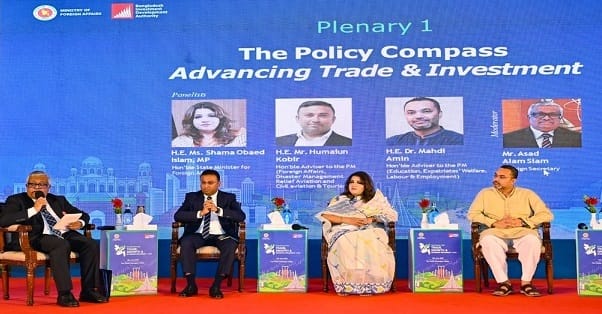
Speaking at an economic diplomacy conference co-hosted by Bangladesh’s Ministry of Foreign Affairs and the Bangladesh Investment Development Authority (BIDA), Foreign Affairs Adviser Humaiun Kobir outlined the interim administration’s diplomatic roadmap for 2026. Addressing an audience of senior diplomats, development partners, and private-sector leaders, Kobir emphasized that while Dhaka seeks to strengthen commercial and diplomatic engagement with New Delhi, the framework governing the relationship must evolve.
“We want cooperation with India, but it must be based on mutual respect,” Kobir stated, noting that establishing a visible, functional partnership remains a priority, provided the diplomatic environment remains conducive.
Rectifying the ‘Bilateral Deficit’
Taking a critical view of past policies, Kobir remarked that the current administration inherited a “tremendous deficit” from the previous 15 years, characterizing prior bilateral agreements as asymmetric and detached from the core interests of the Bangladeshi people.
The adviser signaled a structural “reset” in cross-border relations, explicitly stating that diplomatic and trade negotiations must adapt to the new domestic political landscape. “The reset must realize that Sheikh Hasina does not exist in today’s Bangladesh politics,” Kobir affirmed, referencing the challenges posed by the former Prime Minister’s presence in India and subsequent attempts to destabilize the country.
A Pragmatic Outlook for Trade and Investment
Despite these friction points, Dhaka remains optimistic about economic stabilization. Following a recent high-level visit by Bangladesh Foreign Minister Khalilur Rahman to New Delhi, Kobir pointed to a positive shift in mindset from both leaderships, urging both nations to address geopolitical challenges pragmatically to protect regional trade and economic interests.
The baseline of Bangladesh’s economic strategy remains forward-looking. The BIDA-led conference served as a platform to align the state’s 2026 economic diplomacy roadmap with private-sector growth, highlighting key reform areas including:
- Trade and Investment Policy: Restructuring bilateral frameworks to ensure equitable market access.
- Financial & Commerce Reforms: Streamlining cross-border fiscal policies to attract foreign direct investment (FDI).
- Emerging Sectors: Capitalizing on high-growth industries such as Artificial Intelligence (AI), digital infrastructure, and creative economies to diversify Bangladesh’s export portfolio.