Asad Mirza
The framework peace agreement between the United States and Iran has reduced the immediate risk of a wider regional war. Yet the accord leaves unresolved the central issues that have fuelled four decades of confrontation, making its long-term survival far from assured.
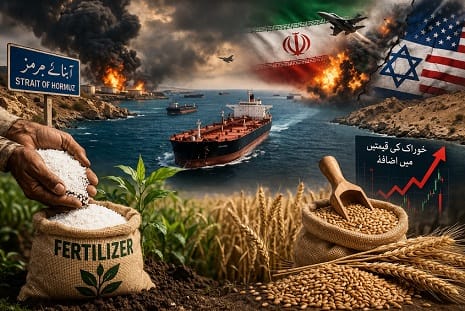
The announcement of a framework peace agreement between the United States and Iran marks one of the most significant diplomatic developments in West Asia in decades. After months of direct military confrontation that disrupted global energy markets, threatened maritime security in the Strait of Hormuz and raised fears of a regional conflagration, Washington and Tehran have chosen negotiation over continued escalation. Yet history suggests that signing a peace framework is considerably easier than implementing one.
While both sides have declared victory, the agreement remains less a comprehensive peace treaty than a political understanding designed to halt hostilities and create space for further negotiations. Whether it ultimately succeeds will depend not only on American and Iranian commitments but also on Israel’s posture, domestic political opposition in both countries, and unresolved questions surrounding Iran’s nuclear programme.
President Donald Trump has presented the agreement as evidence that his administration successfully combined military pressure with diplomacy. He has repeatedly emphasised that the Strait of Hormuz would reopen fully, restoring confidence in global energy markets. The reopening of one of the world’s most important maritime chokepoints has already eased concerns over oil supplies and shipping costs. Indian Prime Minister Narendra Modi has welcomed the agreement, expressing hope that peace and stability would return to West Asia – a region of enormous strategic importance for India’s energy security and expatriate population.
However, beyond these immediate gains lies a much more complicated strategic picture.
America’s Calculated Pragmatism
The American position represents a noticeable evolution rather than an outright policy reversal.
For years, successive US administrations insisted that Iran must completely dismantle its nuclear capabilities before meaningful sanctions relief could occur. The present framework appears considerably more pragmatic. Rather than demanding immediate resolution of every contentious issue, Washington has accepted a phased process in which military hostilities end first, while negotiations continue over nuclear verification, sanctions and regional security.
This reflects strategic realities.
The recent conflict demonstrated that although American military superiority remains overwhelming, sustaining a prolonged regional war carries significant economic and political costs. Disruptions in the Strait of Hormuz affected global oil markets, while continued military operations risked drawing additional regional actors into the conflict.
Equally important are domestic political considerations. President Trump entered office promising to avoid prolonged overseas wars. Although his administration justified military operations as necessary responses to Iranian actions, public support for an extended conflict remained uncertain. The peace framework therefore allows Washington to claim both military strength and diplomatic success.
Nevertheless, skepticism exists within Republican circles. Some conservatives argue that any sanctions relief could provide Tehran with resources to rebuild its military capabilities. Others question whether Iran can be trusted to comply with future nuclear obligations given previous disputes over international inspections.
Iran’s Strategic Narrative
Iran’s leadership also portrays the agreement as a victory.
Tehran argues that it resisted overwhelming American and Israeli military pressure without surrendering its core strategic objectives. Iranian officials have repeatedly maintained that the country will not abandon peaceful nuclear technology or compromise its sovereignty under coercion.
The reported framework appears to support part of that narrative. Rather than requiring immediate dismantlement of Iran’s nuclear infrastructure, negotiations on enrichment and uranium stockpiles have been deferred to subsequent talks. This allows Iranian leaders to tell domestic audiences that fundamental national interests remain protected while sanctions relief becomes possible through future negotiations.
Yet Iran faces its own internal constraints.
Hard-line factions remain deeply suspicious of Washington after decades of sanctions, covert operations and diplomatic breakdowns. Many Iranian conservatives continue to cite the collapse of the 2015 nuclear agreement after the United States withdrew from it during Trump’s first presidency as evidence that American commitments cannot be trusted.
Consequently, Tehran is likely to insist upon stronger guarantees before making irreversible concessions regarding uranium enrichment or international inspections.
The Weight of History
History casts a long shadow over every US-Iran negotiation.
Since the 1979 Iranian Revolution, relations have been characterised by mutual distrust, sanctions, proxy conflicts and periodic military confrontations. Every major diplomatic breakthrough has eventually unravelled under competing domestic politics and shifting strategic priorities.
The Joint Comprehensive Plan of Action (JCPOA) of 2015 initially demonstrated that sustained diplomacy could constrain Iran’s nuclear activities. However, Washington’s withdrawal from the agreement in 2018 fundamentally damaged Iranian confidence in American reliability. Tehran subsequently expanded uranium enrichment while Washington intensified sanctions, creating the cycle that ultimately contributed to the latest confrontation.
This historical experience explains why today’s negotiations remain cautious.
Neither side wishes to repeat previous failures.
The Nuclear Question Remains Unresolved
The most significant weakness of the present framework is that it postpones rather than resolves the central nuclear dispute.
Reports indicate that Iran’s stockpile of highly enriched uranium remains one of the principal issues awaiting negotiation. Washington continues to demand verified reductions in enrichment capability alongside intrusive international monitoring. Tehran insists that peaceful nuclear enrichment remains its sovereign right under international law.
This creates what many analysts describe as an “indivisibility problem.” Neither side can easily compromise on an issue viewed as fundamental to national security.
For Washington, preventing an Iranian nuclear weapon remains non-negotiable.
For Tehran, maintaining an indigenous nuclear programme has become closely tied to national prestige and strategic independence.
Until these competing objectives are reconciled, the peace agreement rests on fragile foundations.
Regional Complications
Even perfect US-Iran cooperation would not automatically stabilise the region.
Israel has made clear that its security concerns extend beyond any bilateral American-Iranian understanding. Israeli leaders remain focused on Hezbollah, Iranian regional influence and missile capabilities. Reports indicate that Israeli military operations in Lebanon remain outside the framework agreement, creating the possibility that renewed fighting could undermine broader diplomacy.
Similarly, Iran’s relationships with regional partners – including Hezbollah and other allied groups – remain largely untouched by the current framework.
Unless these broader regional security issues are eventually incorporated into future negotiations, new crises could emerge even if Washington and Tehran maintain direct dialogue.
Reasons for Cautious Optimism
Despite these challenges, there are reasons to believe the agreement may prove more durable than previous efforts.
Both governments have experienced the enormous costs of direct conflict. Economic disruption, military expenditures and international diplomatic pressure have created incentives for restraint that did not exist during earlier periods of confrontation.
Furthermore, the agreement appears deliberately incremental. Rather than attempting to solve every issue simultaneously, negotiators have prioritised ending active hostilities before addressing more politically difficult questions.
This sequencing may increase the likelihood of gradual progress.
A Fragile Peace
Ultimately, the framework agreement should be viewed not as the conclusion of the crisis but as the beginning of an exceptionally complex diplomatic process.
Its success depends upon sustained political will, rigorous verification mechanisms, credible implementation of reciprocal commitments and careful management of regional tensions. Domestic opponents in both Washington and Tehran remain capable of derailing negotiations, while unresolved nuclear issues continue to pose the greatest long-term challenge.
The agreement has undoubtedly reduced the immediate danger of war and restored hope for regional stability. Yet history warns against excessive optimism. American and Iranian relations have repeatedly oscillated between diplomacy and confrontation, with trust remaining the rarest commodity.
Whether this agreement survives will depend less on the signatures placed upon it than on whether both governments can overcome decades of accumulated suspicion and demonstrate that negotiated compromise serves their national interests better than perpetual confrontation. Only then can this ceasefire evolve into a lasting peace.
—–
(Asad Mirza is a Delhi-based commentator on defence, international and strategic affairs. Earlier he has been associated with BBC Urdu Service, Khaleej Times-Dubai, UNI and AIR)