Last Updated on February 28, 2026 12:11 am by BIZNAMA NEWS
AMN / NEW DELHI
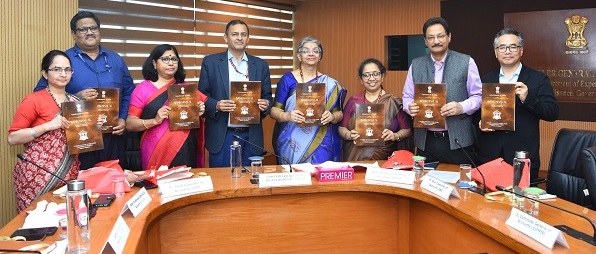
In a significant move to modernize India’s financial governance, the Controller General of Accounts (CGA), T.C.A. Kalyani, on Friday unveiled two landmark initiatives: the Government Bank Dashboard and the Government Bank Manual.
These tools are designed to overhaul how banks manage government transactions, shifting the ecosystem toward higher accountability, real-time transparency, and standardized operations.
The Government Bank Manual introduces a unified operational framework, replacing fragmented practices with clear, standardized procedures for reporting, reconciliation, and compliance. By defining strict service-level requirements, the manual aims to mitigate operational risks and ensure that every bank handling public funds operates under the same rigorous accountability standards.
The New Pillars of Financial Governance
The dual launch addresses long-standing complexities in the interface between the Union Government and the banking sector.
1. The Government Bank Manual: The Rulebook for Standardization
The Manual acts as a definitive guide for banks handling government business. By establishing a uniform framework, it aims to eliminate the “grey areas” of operational banking.
- Operational Clarity: Defines reporting obligations and strict reconciliation timelines.
- Risk Mitigation: Sets clear compliance requirements to reduce operational errors.
- Accountability: Ensures all stakeholders follow a synchronized set of rules, reducing ambiguity in public fund management.
2. The Government Bank Dashboard: Proactive, Real-Time Oversight
Marking a departure from traditional “post-facto” (reactive) accounting, the Dashboard introduces a data-driven monitoring system.
- KPI Tracking: Monitors remittance timelines, transaction success rates, and scroll compliance in real-time.
- Performance Benchmarking: Allows the CGA to oversee adherence to service-level standards instantly.
- Proactive Corrections: Enables authorities to identify and fix bottlenecks before they escalate into systemic delays.
A Vision for Modernized Accounting
During the launch, CGA T.C.A. Kalyani emphasized that these reforms are not just about tools, but about institutionalizing a culture of shared responsibility.
“These initiatives institutionalize uniform procedures and objective benchmarks, reinforcing our shared responsibility in safeguarding public funds,” Kalyani stated.
She further outlined the Phase 2 roadmap, which will integrate:
- Advanced Data Analytics
- Strengthened Cybersecurity Safeguards
- Deeper Digital Integration
- Institutional Capacity Building
The Role of the CGA: At a Glance
The CGA serves as the principal advisor on accounting matters for the Union Government. The launch of these tools falls directly under the CGA’s core mandate:
| Responsibility Area | Functional Detail |
| Policy Framing | Revising rules and manuals for Union and State government accounting. |
| Cash Reconciliation | Reconciling the Union Government’s cash balances with the Reserve Bank of India (RBI). |
| Financial Reporting | Consolidating monthly accounts and preparing Annual Civil Appropriation Accounts. |
| Monitoring | Overseeing accounting standards across all Central Civil Accounts Offices. |
Why This Matters
For the average citizen and the economy, a more efficient CGA-Bank interface means faster processing of government payments, more accurate revenue tracking, and a tighter lid on fiscal leakages. By moving to a dashboard-led system, the government is effectively “digitizing the watchdog.”