
Last Updated on February 1, 2026 4:56 pm by BIZNAMA NEWS
R. Suryamurthy
India has cleared a record ₹7.85 trillion ($94.5 billion) defence outlay for FY 2026–27, marking a sharp 15 per cent increase that reflects a strategic pivot towards advanced military capabilities in the aftermath of the “Operation Sindoor” confrontation with Pakistan.
Accounting for nearly 2 per cent of GDP, the expanded allocation highlights New Delhi’s push to fast-track modernisation of the Army, Navy and Air Force, while reducing external dependence through an intensified drive for indigenous defence manufacturing.
The allocation, equivalent to approximately 1.99% of India’s GDP, underscores New Delhi’s urgency to modernize its three services while insulating its supply chains through aggressive indigenization.
POST-SINDOOR MODERNIZATION SURGE
The centerpiece of the budget is a “whopping” 21.8% increase in capital outlay for military modernization, which climbs to 2.19 trillion rupees from 1.8 trillion rupees in the previous Budget Estimate (BE).
Defence Minister Rajnath Singh stated the hike was vital to reinforcing the country’s resolve following the success of Operation Sindoor, the first major military confrontation with Pakistan since 1971. Sources indicate the ministry had sought a significant boost to replenish stocks and accelerate hardware acquisition after the conflict.
Key Procurement Allocations:
• Aircraft and Aero Engines: 63,733.94 crore rupees, reflecting a prioritized push for air superiority.
• Naval Fleet: 25,023 crore rupees, as India eyes a larger role in Indo-Pacific maritime security.
• R&D: Hiked to 17,250 crore rupees to fuel the “iDEX” (Innovations for Defence Excellence) ecosystem.
The increased capital allows the Ministry of Defence to sign several “mega contracts” in the coming fiscal year, reportedly including the long-awaited deal for 114 Rafale fighter jets.
REVENUE AND PENSION PRESSURES
While modernization is the headline, the “tail” of the budget—operational expenses and pensions—continues to demand the lion’s share of funding.
• Revenue Expenditure: Set at 3.65 trillion rupees (a 17.24% increase), covering ammunition, fuel, and salaries.
• Pensions: Allotted 1.71 trillion rupees, up 6.53% from 1.60 trillion rupees in the current fiscal, reflecting the mounting cost of a veteran-heavy force.
FISCAL ANALYSIS: BE VS. RE TRENDS
Analysts point to the Revised Estimates (RE) as the true indicator of India’s military spending trajectory. For the 2025-26 fiscal, while the government initially earmarked 1.80 trillion rupees for capital spending, the RE surged to 1.86 trillion rupees as the military moved to meet operational exigencies post-Operation Sindoor.
Similarly, the allocation for aircraft and aero engines saw a massive mid-year revision last year, jumping from a BE of 48,614 crore rupees to an RE of 72,780 crore rupees—a trend the 2026-27 budget seeks to formalize with higher initial outlays.
MRO AND CUSTOMS LIBERALIZATION
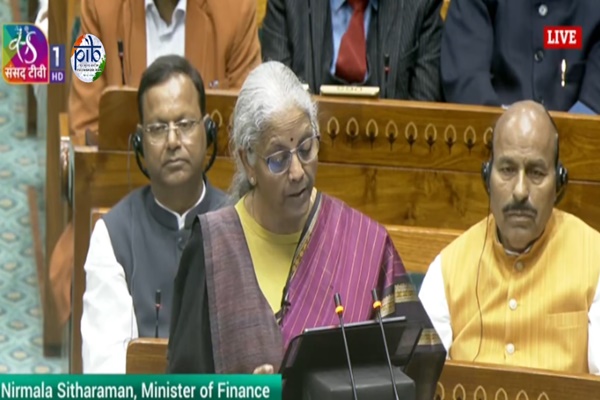
To bolster domestic manufacturing, Finance Minister Nirmala Sitharaman proposed sweeping customs duty exemptions. The budget waives duties on raw materials imported for the manufacture of aircraft parts, specifically targeting the Maintenance, Repair, and Overhaul (MRO) sector.
“This budget strengthens the balance between security, development, and self-reliance,” Rajnath Singh said, noting that the 24% increase in modernization funds for the three services would make India’s military capability “even more powerful.”
STRATEGIC IMPLICATIONS
By raising the defence budget to nearly 2% of GDP—up from roughly 1.8% in FY26—India is aligning its fiscal priorities with its role as a regional “security provider.” The abolition of the ‘Angel Tax’ further complements this by encouraging private equity and NRI capital to flow into domestic defence startups.
As global tensions rise and the memory of Operation Sindoor remains fresh, New Delhi’s message is clear: fiscal consolidation (targeting a 4.3% deficit) will not come at the expense of its “aatmanirbhar” (self-reliant) military machine.