Last Updated on March 6, 2026 2:47 pm by BIZNAMA NEWS
Basmati, Grapes, Bananas Hit as West Asia War Chokes Trade Routes
Staff Reporter / New Delhi
— In a sharply worded Statement, the All India Kisan Sabha (AIKS) on Thursday launched a blistering attack on the Modi administration, accusing the government of “complicity” in the escalating U.S.-Israel conflict with Iran. The organization is demanding an immediate, comprehensive emergency relief package for millions of farmers, workers, and exporters whose livelihoods have been paralyzed by the geopolitical crisis.
The AIKS statement characterizes the current economic shock not as a mere market fluctuation, but as a “direct consequence” of India’s strategic alignment with Western powers. The organization alleges that the government’s recent trade deals with the U.S. have left Indian agriculture vulnerable to the fallout of “imperialist wars.”
The Economic Toll: Crude Oil and Currency Volatility
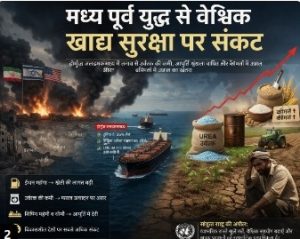
The conflict has sent shockwaves through the energy and financial sectors, creating a pincer movement on the Indian agrarian economy:
- Crude Oil Surge: Brent crude has jumped to approximately $84 per barrel over the past week. With every $1 increase in oil prices adding an estimated $2 billion to India’s import bill, the AIKS warns of an impending fertilizer crisis.
- Currency Devaluation: Despite interventions by the Reserve Bank of India, the Rupee struggled at a low of 91.82 against the US Dollar on Thursday, further inflating the cost of essential agricultural imports.
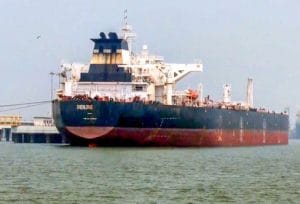
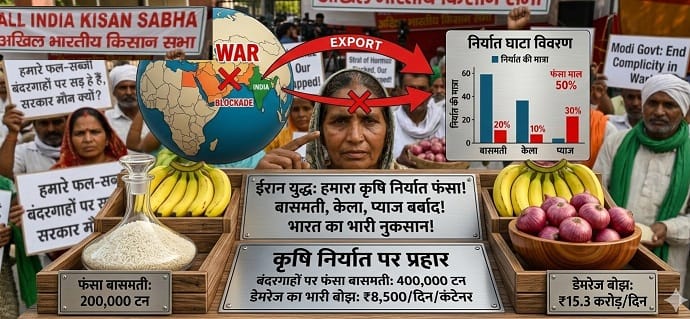
- Strait of Hormuz Blockade: With 56% of India’s merchandise exports passing through this vital artery, the chokehold on the Strait has turned projected income into “trapped debt” overnight.
The Carnage in Numbers: A Snapshot of the Crisis
Data compiled by the AIKS from affected regions reveals a sector in freefall:
| Commodity | Scale of Impact | Financial/Labor Loss |
| Basmati Rice | 400,000 tonnes stranded (ports/sea) | ₹3,200 crore value; 6% price crash |
| Bananas | 1,200 containers stuck (Solapur) | ₹8,500 daily demurrage per container |
| Grapes | 6,000 tonnes at risk | 300 containers redirected to local dumping |
| Onions | 5,400 tonnes rotting (JNPT) | Dubai market remains inaccessible |
| Poultry | 80 lakh eggs stalled daily | Domestic price collapse |
| Employment | 1.6 crore person-days | Immediate risk to landless laborers |
Urgent Demands for Justice
The Kisan Sabha has rejected “hollow budget allocations,” calling instead for “cash in hand” through a multi-pronged relief strategy:
Immediate Financial Aid
- Direct Assistance: A one-time emergency payment of ₹50,000 per hectare for affected families in the horticulture and grain sectors.
- Market Intervention: Immediate procurement by NAFED and FCI of all perishable produce at pre-crisis prices (e.g., ₹35/kg for onions).
- Charge Waivers: Total waiver of all port demurrage and warehousing fees incurred due to war-induced delays.
- Debt Relief: A complete moratorium and interest waiver on all agricultural loans for the current season.
- Laborer Support: A ₹10,000 monthly stipend for loaders and porters displaced by the export halt.
Long-Term Policy Shifts
The AIKS is further calling for a radical shift in India’s foreign and trade policy, demanding the revocation of recent India-US trade deals and an official exit from “imperialist fronts” such as I2U2 and the QUAD. The group insists that Indian agriculture be constitutionally shielded from international trade negotiations.
A Warning of Unrest
The statement concludes with a grim warning to the Center. Asserting that the pain of the conflict is now “felt in every Indian village,” the AIKS cautioned that continued perceived subservience to foreign interests would trigger a mass movement “far bigger than that of 2020-21.”
“The economic shock caused by disruptions in the Strait of Hormuz is now being felt in villages across India,” the organisation said. It cautioned that if the government fails to provide relief, farmers could launch protests similar to—or larger than—the nationwide 2020–2021 Indian farmers’ protest.
The government has not yet issued an official response to the AIKS statement. Economists, however, say the evolving situation in West Asia could have far-reaching implications for India’s agriculture, trade and energy security if the conflict continues.