Last Updated on March 28, 2026 4:08 pm by BIZNAMA NEWS
Zakir Hossain from Dhaka
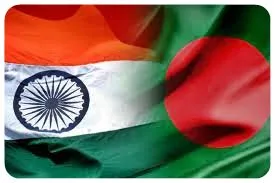
The relationship between Dhaka and New Delhi is showing signs of renewed momentum after months of strain, with both governments indicating a willingness to rebuild ties through dialogue, economic cooperation and regional connectivity.
A senior Bangladesh government official said the renewed engagement became increasingly visible after the formation of a government led by Prime Minister Tarique Rahman, suggesting a possible shift towards more constructive cooperation.
He said the re-engagement, following a difficult phase during the interim government, reflected a shared desire to reset the tone of bilateral relations.
“India looks forward to partnering with Bangladesh for advancing mutual progress and prosperity,” Minister of State for External Affairs Kirti Vardhan Singh said on Thursday, while noting that Bangladesh-India ties rest on an enduring foundation of shared sacrifices during the Liberation War.
In the lead-up to Bangladesh’s election, external affairs minister S Jaishankar attended the funeral of former Prime Minister Khaleda Zia in Dhaka. In New Delhi, defence minister Rajnath Singh visited the Bangladesh High Commission to pay homage to Khaleda.
India also marked the transition in Dhaka through high-level representation, with Lok Sabha Speaker Om Birla and foreign secretary Vikram Misri attending the new government’s swearing-in ceremony.
Bangladesh High Commissioner to India M Riaz Hamidullah met Jaishankar at the ministry of external affairs in New Delhi on March 20. Though almost a year had passed since Hamidullah’s posting, the meeting is being seen by diplomats as a positive signal towards deeper engagement. A diplomat said the two sides discussed ways of advancing bilateral ties.
The meeting also came amid reports in Indian media that Bangladesh foreign minister Khalilur Rahman may pay a short visit to New Delhi in April, his first since the new government took office. “This is not yet finalised,” a senior official said.
He added that both foreign ministers are scheduled to attend the 9th Indian Ocean Conference in Mauritius from April 10 to 12. The conference, organised by the India Foundation in association with the Government of Mauritius and India’s ministry of external affairs, will be held under the theme “Collective Stewardship for Indian Ocean Governance.”
Organisers said the conference will bring together leaders, policymakers and experts from across the Indian Ocean region to discuss shared responsibilities, cooperative frameworks and the future of regional governance.
A diplomatic source described relations with the new government in Bangladesh as a “welcome change”, saying both sides were showing greater sensitivity to each other’s concerns and were cautiously rebuilding ties for a stronger partnership.
The source also said there appeared to have been a “deliberate attempt” during the interim government to derail relations with India, even though New Delhi had sought to engage with the administration from the outset.
Prime Minister Narendra Modi was the first foreign leader to congratulate former chief adviser Muhammad Yunus. A foreign minister-level meeting was also held in New York. Vikram Misri later visited Dhaka, while Yunus and Modi met in Bangkok on the sidelines of the BIMSTEC Summit.
According to the Indian side, members of the interim government used multiple opportunities to cast doubt on India’s intentions and promote a strong anti-India narrative.
Speaking at a reception in New Delhi to mark Bangladesh’s Independence Day, High Commissioner Hamidullah said it was possible to chart a path towards “interdependent relations” for future generations in both countries, despite differences and divergences.
“As we speak, both our countries are navigating complexities and uncertainties in the global order. While we foresee challenging times ahead, Bangladesh looks forward to working together to uphold the values of open regionalism and multilateralism,” the envoy said.
Last month, Tarique Rahman told Modi that Bangladesh attached high importance to its ties with India, describing the relationship as one shaped by shared history, culture and geography. “Our two peoples share considerable commonality and enjoy deep-rooted ties.”
“As our government embarks on its mandate, we look forward to advancing our ties with India, premised on dignity, equality, mutual trust, and shared benefits. If Dhaka and Delhi address issues in ways that benefit ordinary people, there is much our two countries can achieve together,” Tarique said.
Ahead of Eid, Indian High Commissioner to Bangladesh Pranay Verma held a series of meetings with key ministers and discussed bilateral ties and economic cooperation, including ways to strengthen transport, energy and digital connectivity.
Both sides also explored new areas of cooperation in people-centric sectors aligned with their development priorities and based on mutual interest and benefit.
“To me, our ties go far beyond the 12 billion dollars in bilateral goods trade. Conservative estimates point to comprehensive economic transactions in the order of 28 to 30 billion dollars, minimum,” Hamidullah said.
Indian High Commissioner Verma said that as two aspiring and forward-moving societies, Bangladesh and India stood at the cusp of a new future in which they could offer each other, and the region, shared prosperity by working together.