Last Updated on February 7, 2026 4:33 pm by BIZNAMA NEWS
By R. Suryamurthy
India and the United States have unveiled the framework for an interim trade agreement that offers immediate tariff relief for Indian exporters but locks New Delhi into far-reaching concessions on market access, regulation, digital policy and economic security, raising questions over whether the deal restores balance—or merely pauses pressure—ahead of a full bilateral trade agreement (BTA).
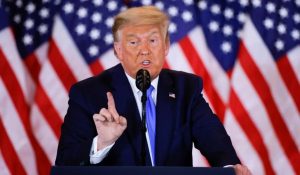
The framework, announced in a joint statement issued late on February 6 by the White House and India’s commerce ministry, is being billed by both governments as a “historic milestone” in trade relations and a bridge toward a comprehensive BTA launched by U.S. President Donald Trump and Prime Minister Narendra Modi in February 2025.
A closer reading, however, suggests an asymmetric exchange: India commits to dismantling tariffs and regulatory barriers across sensitive sectors, while Washington offers conditional relief from punitive “reciprocal” tariffs it had imposed unilaterally, without cutting its core most-favoured-nation (MFN) duties.
Tariff relief, not tariff liberalisation
Under the framework, the United States will reduce reciprocal tariffs on about 55% of Indian exports—slashing rates that had climbed as high as 50% down to 18%. These duties, imposed under Trump-era executive orders aimed at narrowing U.S. trade deficits, had hit Indian shipments of textiles, apparel, leather goods, chemicals, machinery, gems and artisanal products.
The rollback offers immediate breathing room to Indian exporters, particularly labour-intensive sectors and MSMEs that had lost competitiveness against Asian peers facing lower U.S. tariffs.
But Washington has not agreed to reduce its MFN tariffs on any product. Instead, future relief—covering items such as generic pharmaceuticals, aircraft parts, and gems and diamonds—remains contingent on the successful conclusion of the interim agreement and subsequent negotiations.
India, by contrast, has agreed to eliminate or sharply reduce MFN tariffs on all U.S. industrial goods and a wide range of agricultural and food products, including tree nuts, fresh and processed fruits, soybean oil, wine and spirits, dried distillers’ grains (DDGs) and animal feed sorghum.
Economists warn these concessions could have domestic political and economic fallout. Tariff cuts on imported apples, oranges and soybean oil are expected to pressure Indian farmers, while broader liberalisation in electronics components, smartphones and solar inputs risks undercutting domestic manufacturing ambitions tied to production-linked incentive (PLI) schemes.
Section 232 relief comes with strings
The agreement also grants India selective relief from U.S. national security tariffs imposed under Section 232 of U.S. trade law.
Washington will remove tariffs on Indian aircraft and aircraft parts that had been swept into earlier national security actions on steel, aluminium and copper. India will also receive a preferential tariff-rate quota for automotive parts affected by U.S. national security tariffs imposed in 2019.
In pharmaceuticals, however, outcomes remain explicitly contingent on the findings of an ongoing U.S. Section 232 investigation into pharmaceutical imports—leaving India’s globally competitive generics sector exposed to future trade action.
Trade analysts note that while the rollback of Section 232 measures offers tangible gains, it reinforces a precedent where India’s market access is exchanged for relief from trade barriers the U.S. imposed unilaterally in the first place.
Regulatory and standards sovereignty at stake
Beyond tariffs, the interim framework pushes India to dismantle long-standing non-tariff barriers that have frustrated U.S. exporters.
India has agreed to ease restrictions on U.S. medical devices, scrap import licensing requirements for U.S. information and communication technology goods, and decide within six months whether U.S. or international standards—including testing requirements—will be accepted for American exports in selected sectors.
It has also committed to addressing non-tariff barriers in food and agriculture, a sensitive area where India’s domestic standards, sanitary rules and certification processes have traditionally been tightly guarded.
Trade policy experts warn these provisions could subordinate India’s regulatory autonomy to U.S. certification systems, mirroring precedents in U.S. trade deals with smaller economies. In agriculture, such commitments risk diluting India’s ability to enforce domestic health, safety and labelling norms without reciprocal guarantees.
Digital trade: policy space under pressure
The framework commits both sides to address “discriminatory or burdensome practices” affecting digital trade and to chart a pathway toward ambitious digital trade rules under the BTA.
While details are sparse, analysts say Washington is likely to push India to abandon digital services taxes, data-related levies and its opposition at the WTO to a permanent moratorium on customs duties on electronic transmissions.
Such commitments could significantly narrow India’s digital policy space, limiting future regulation and taxation of global technology firms at a time when digital revenues form a growing share of the economy.
Economic security alignment raises red flags
Perhaps the most consequential provision lies outside traditional trade policy.
India and the U.S. have agreed to strengthen “economic security alignment” to enhance supply chain resilience and innovation, including cooperation on export controls, investment screening and responses to “non-market policies of third parties”.
Critics argue this language could constrain India’s strategic autonomy, potentially tying its trade and investment policies to U.S. sanctions regimes and geopolitical priorities. Any future U.S. trade action against countries such as China or Russia on economic security grounds could place India under pressure to follow suit.
The $500 billion question
India has also declared its intent to purchase $500 billion worth of U.S. goods over the next five years, spanning energy, aircraft, technology products, precious metals and coking coal.
At current import levels of roughly $45 billion annually, meeting this target would require more than doubling U.S. exports to India—a scale analysts describe as implausible, particularly since key purchases, such as aircraft, are commercial decisions taken by private airlines.
Even a major expansion of Boeing fleets would account for only a fraction of the headline figure, raising doubts over how the commitment will be operationalised.
A tactical truce, not a reset
Economists broadly view the interim pact as a tactical de-escalation rather than a transformative trade breakthrough.
The U.S. has eased tariffs that were increasingly seen as unsustainable, while securing deeper and more permanent market access, regulatory and strategic commitments from India. For New Delhi, the immediate export relief may stabilise trade flows and currency pressures, but the longer-term costs—in agriculture, manufacturing, digital policy and strategic autonomy—remain uncertain.
As negotiations move toward a full BTA, the interim framework sets the baseline. Whether India can rebalance the equation in subsequent rounds will determine if the deal evolves into a genuine partnership—or cements an uneven exchange dressed up as reciprocity.