Last Updated on March 6, 2026 10:52 pm by BIZNAMA NEWS
AMN Business Desk
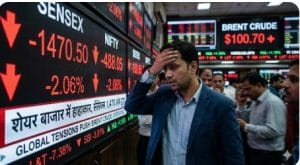
Escalating geopolitical tensions between the United States and Iran rattled global financial markets this week, sending India’s benchmark equity indices into their steepest weekly decline in more than a year. Surging crude oil prices, disruptions in key shipping routes, and rising investor anxiety triggered widespread selling across sectors, dragging the market lower.
The BSE Sensex plunged 2,370 points during the week, while the Nifty 50 fell 2.9 per cent, reflecting broad risk aversion among investors amid growing uncertainty in global energy markets.
On Friday, the Sensex closed at 78,918.90, down 1,097 points (1.37%), while the Nifty settled at 24,450.45, losing 315.45 points (1.27%). Market participants cited escalating conflict in West Asia and fears of oil supply disruptions as the key triggers for the sharp correction.
Oil Shock from Strait of Hormuz Disruptions
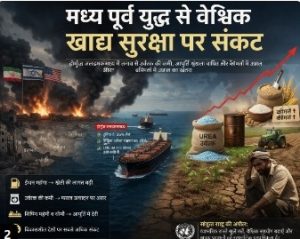
The sell-off was largely driven by rising fears that the conflict between Washington and Tehran could disrupt global oil supplies. Shipping activity through the Strait of Hormuz, one of the world’s most critical oil transit routes, reportedly slowed dramatically as tensions intensified.
Global crude prices reacted sharply. Brent Crude surged above $85 per barrel, while West Texas Intermediate jumped 8.5 per cent to around $81, marking its biggest single-day gain since 2020.
Siddhartha Khemka, Head of Research at Motilal Oswal Financial Services, said fears of supply disruption had intensified after shipping activity through the Strait of Hormuz nearly stalled, raising concerns about a potential shock to global oil availability.
For India—one of the world’s largest crude importers—the surge in oil prices poses significant macroeconomic risks, including pressure on inflation, fiscal balances, and the current account deficit.
Volatility Surges as Investors Turn Cautious
Investor anxiety was clearly reflected in the spike of the India VIX, often referred to as the market’s “fear gauge.” The index surged more than 11 per cent on Friday, closing at 19.88, indicating a sharp rise in market volatility expectations.
Vinod Nair, Head of Research at Geojit Investments, warned that persistently high crude prices could adversely affect India’s economic outlook.
According to Nair, a sustained oil rally could widen India’s twin deficits—the fiscal deficit and current account deficit—while also complicating the monetary policy outlook for the Reserve Bank of India.
Market Breadth Weakens
The sell-off was broad-based, with declining stocks significantly outnumbering gainers on the Bombay Stock Exchange.
- 2,396 stocks declined
- 1,812 stocks advanced
- 258 stocks hit 52-week lows
- 69 stocks reached 52-week highs
Such market breadth signals deep investor caution, particularly among mid-cap and small-cap counters.
Sectoral Impact: Banks, Tourism Hit Hard
Most sectoral indices ended the week in the red, with financial stocks leading the decline.
Banking and Financial Services
The Nifty PSU Bank Index emerged as the worst performer, dropping 6.5 per cent for the week. The decline was partly attributed to the Reserve Bank of India’s proposal to tighten rules on bundling insurance products with bank loans, which could impact cross-selling revenues.
On Friday alone:
- Nifty Private Bank Index fell 2.3%
- Nifty Financial Services Index declined 2.1%
- Nifty PSU Bank Index slipped 2%
Major banking stocks such as ICICI Bank, State Bank of India, and Axis Bank were among the top losers.
Tourism and Aviation
The India Tourism Index declined 5.88 per cent, reflecting investor concerns that geopolitical instability and high fuel costs could hurt travel demand and airline profitability.
Defence Sector Outperforms
In contrast, defence-related stocks saw strong buying interest. The India Defence Index surged 4.85 per cent for the week, including a 2.8 per cent jump on Friday, as investors anticipated higher defence spending amid rising global tensions.
Stock-Specific Movers
Among Nifty 50 stocks, several energy and defence-linked companies gained:
Top Gainers
- Bharat Electronics Limited: +2.52%
- Oil and Natural Gas Corporation: +1.28%
- Reliance Industries: +1.27%
- NTPC Limited: +0.82%
- Hindalco Industries: +0.59%
Top Losers
- ICICI Bank: –3.13%
- Shriram Finance: –2.77%
- State Bank of India: –2.54%
- Axis Bank: –2.54%
Rupee Weakens as Oil Bill Rises
The Indian Rupee also came under pressure, weakening by 13 paise to close at 91.71 against the US dollar.
Jateen Trivedi, VP Research Analyst at LKP Securities, explained that higher crude prices increase India’s import bill, which tends to weigh on the rupee.
He expects the currency to trade in the 91.25–92.50 range in the near term if oil prices remain elevated.
Gold Holds Firm Amid Uncertainty
Amid market volatility, investors maintained a cautious stance toward safe-haven assets. Domestic gold prices hovered between ₹1,59,500 and ₹1,60,000, while international gold traded near $5,100 per ounce on the Chicago Mercantile Exchange.
Analysts identified ₹1,58,000 as key support and ₹1,62,000 as immediate resistance for bullion prices.
Market Outlook: Bearish Bias Persists
Market experts warn that the near-term outlook remains cautious, with geopolitical developments likely to dominate investor sentiment.
Rupak De, Senior Technical Analyst at LKP Securities, noted that the Nifty continues to trade below its previous swing low, indicating persistent bearish momentum.
According to him, the index could potentially slide toward 24,000 levels or lower unless it decisively crosses 25,000.
Amol Athawale, VP Technical Research at Kotak Securities, identified 24,300–24,000 as immediate support for the Nifty, while 24,500 remains the near-term resistance level.
For the Nifty Bank, the 200-day moving average near 57,500 will be a crucial support zone. A breach below this level could push the index toward 56,800–56,500.
Key Factor for Next Week
Analysts say weekend geopolitical developments in West Asia will likely determine the tone of trading when markets reopen on Monday.
If crude prices continue to surge or shipping disruptions worsen in the Strait of Hormuz, Indian equities could face further downside pressure, particularly in energy-sensitive sectors such as aviation, logistics, and financial services.
However, any signs of diplomatic de-escalation could trigger short-covering rallies in the near term.