
Last Updated on January 16, 2026 10:42 pm by BIZNAMA NEWS
CSPOC 2026 Ends with Strong Call for Transparent, Inclusive and People-Centric Parliaments
Staff Reporter / New Delhi
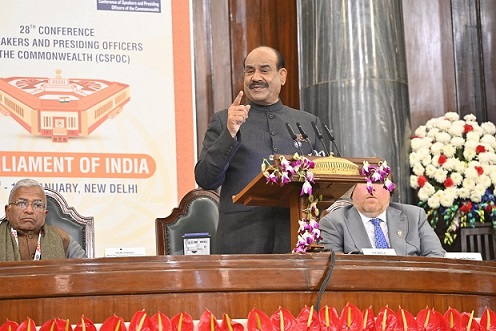
The 28th Conference of Speakers and Presiding Officers of the Commonwealth (CSPOC), which was inaugurated by Prime Minister Mr. Narendra Modi on Thursday concluded today with a renewed commitment to make democratic institutions more people centric. Lok Sabha Speaker Mr. Om Birla delivered the valedictory address at the three-day conference. During the valedictory session, Lok Sabha Speaker handed over the chairmanship of 29th CSPOC to the Rt. Hon. Sir Lindsay Hoyle, Speaker of the UK House of Commons, and wished him best for the success of the next CSPOC in London.
On this occasion, Mr. Birla noted that democratic institutions can remain strong and relevant when they are transparent, inclusive, responsive and accountable to people. He observed that transparency fosters public trust by ensuring openness in decision-making, while inclusivity guarantees that every voice—especially those on the margins—is heard and respected in the democratic process. Together, these principles sustain the legitimacy of democratic institutions and strengthen the enduring bond between the citizen and the State, he opined.
Recalling the vision behind the establishment of CSPOC, 56 years ago, Mr. Birla said that the Conference was conceived to ensure continuous dialogue among democratic legislatures of the Commonwealth and to explore new ways of enhancing parliamentary efficiency and responsiveness. He stated that the 28th CSPOC had carried this legacy forward with renewed vigour and substance. The unprecedented participation of the largest number of countries in CSPOC’s history was highlighted by the Speaker as a defining feature of this Conference. This wide and inclusive representation, he said, would ensure that the New Delhi Conference is remembered as a significant milestone in the history of Commonwealth parliamentary cooperation.
Reflecting on the substantive sessions of the Conference, Mr. Birla noted that discussions on responsible use of Artificial Intelligence in Parliaments, the impact of social media, citizen engagement beyond elections, and the health and well-being of Members of Parliament and parliamentary staff were particularly thought-provoking. These deliberations, he said, helped Presiding Officers gain greater clarity about their evolving roles and responsibilities at a critical juncture where democratic traditions intersect with rapid technological change. He highlighted that technology, inclusion and global partnerships would shape the new world order. He expressed confidence that the bilateral meetings and informal interactions held during the Conference had further strengthened bonds of friendship and understanding among member countries.
Mr. Birla expressed deep appreciation for the active participation, enthusiasm and constructive spirit of all delegations, which made the Conference both meaningful and memorable. He observed that the discussions reflected the enduring relevance of CSPOC as a unique platform for collective reflection on making Parliaments more people-centric, accountable and effective.
Lok Sabha Speaker also conveyed heartfelt gratitude to the Prime Minister Mr. Narendra Modi for inaugurating the Conference at the historic Constitution House and for his inspiring address, which eloquently highlighted India’s rich democratic heritage and its steadfast commitment to standing by the global community in times of challenge. He also acknowledged the valuable presence and contributions of the President of the Inter-Parliamentary Union and the Chairperson of the Commonwealth Parliamentary Association, whose participation further enriched the deliberations.
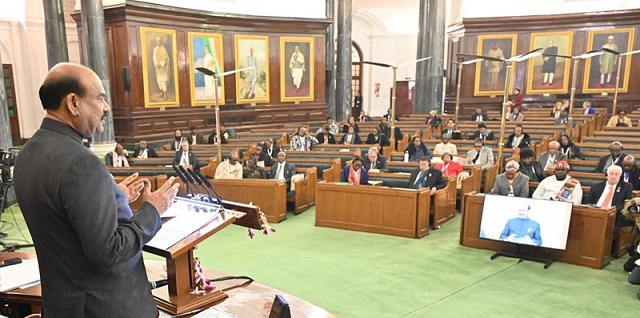
Mr. Birla also expressed sincere thanks to the Hon’ble Vice-President of India for taking time to interact with the Presiding Officers attending the Conference. The Speaker conveyed best wishes to the Rt. Hon. Sir Lindsay Hoyle, Speaker of the UK House of Commons, for the success of the next CSPOC, and extended good wishes to the host Presiding Officers of forthcoming Standing Committee meetings.
The 28th Conference of Speakers and Presiding Officers of the Commonwealth (CSPOC) concluded in New Delhi on a note of optimism, solidarity and renewed resolve to strengthen parliamentary democracy through dialogue, cooperation and innovation. The two-day Conference was marked by substantive, forward-looking deliberations held in an atmosphere of mutual respect, shared democratic values and positive engagement.
CONSENSUS AND DISSENT ARE BOTH STRENGTHS OF DEMOCRACY: LOK SABHA SPEAKER AT CSPOC 2026
Earlier in the day, Chairing the Special Plenary Session, Mr. Birla observed that modern democracies face both unprecedented opportunities and complex, multi-dimensional challenges. He emphasised that the foremost duty of Presiding Officers is to continuously adapt democratic institutions to contemporary needs while remaining anchored in constitutional values . He noted that the true relevance of Parliaments lies in their ability to respond to citizens’ expectations and aspirations, ensuring that debates and deliberations lead to meaningful solutions to public concerns. Enhanced discussion, he stated, directly contributes to greater transparency, accountability and strengthened public trust in legislatures.
Mr. Birla remarked that consensus and dissent are both strengths of democracy, but must be expressed within the framework of parliamentary propriety. In this context, the role of the Presiding Officer was described as decisive in safeguarding the dignity of the House, ensuring impartiality and reinforcing institutional credibility. He stressed that Parliaments belong to the people and must provide space for the voices of all sections of society, including the last person in the social hierarchy. Ensuring wider participation of Members in debates, balanced use of House time and fair opportunity to all sides, he said, are essential responsibilities of the Chair.
Mr. Birla drew attention to the growing expectations of citizens in the age of digital transformation and information revolution. He noted that initiatives such as e-Parliament, paperless functioning and digital databases have enhanced transparency, efficiency and responsiveness of legislatures. Responsible use of technology, including for linguistic inclusion, is a key enabler of more citizen-centric Parliaments, he noted.
Mr. Birla emphasised the pivotal role of Parliamentary Standing Committees, often described as “mini Parliaments,” noting that their scrutiny of the Budget and other legislative proposals sets a high standard of parliamentary oversight. He urged Presiding Officers to constitute and further strengthen these Committees to enhance the effective functioning of Parliament. He also stressed that the process of legislative drafting must be closely supervised by Presiding Officers, as parliamentary laws have a direct and far-reaching impact on the lives of citizens. Additionally, he called upon people’s representatives to raise public concerns in a disciplined, constructive and responsible manner.