
BIZ DESK
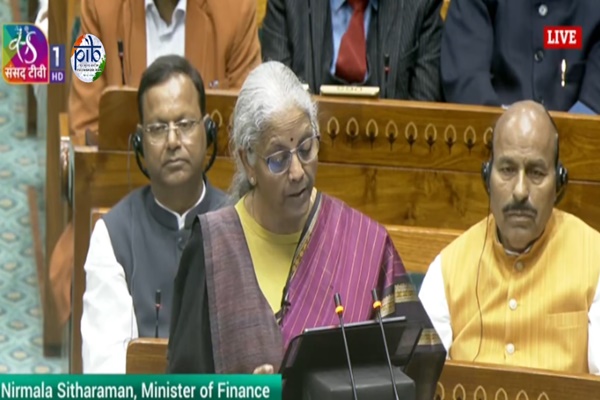
Union Finance Minister Nirmala Sitharaman on Sunday presented the Union Budget 2026-27 in the Parliament.
In her speech, FM Sitharaman said the Budget proposals are anchored on three pillars – faster growth, inclusive development and structural reform – with a continued focus on the poor and disadvantaged.
What Gets Cheaper
One of the most consumer-friendly measures is the sharp reduction in Tax Collected at Source (TCS) on overseas spending. TCS on overseas tour packages has been brought down to 2 per cent, from the earlier 5-20 per cent structure, with no minimum threshold. Similarly, TCS on foreign remittances for education and medical treatment under the Liberalised Remittance Scheme (LRS) has been reduced from 5 per cent to 2 per cent, easing cash-flow pressures on households.
Healthcare has received a major boost, with basic customs duty (BCD) fully exempted on 17 cancer and critical illness drugs. In addition, seven more rare diseases have been included in the list eligible for duty-free personal imports of medicines and food for special medical purposes.
To support clean energy and self-reliance, customs duty has been exempted on sodium antimonate, a key input for solar glass manufacturing. Customs duty exemptions for nuclear power projects have been extended till 2035, irrespective of plant size.
In a push for domestic aviation manufacturing, the Budget provides BCD exemption on components and parts, including engines, used in the manufacture, repair and maintenance of civilian aircraft. Specified parts used in the manufacture of microwave ovens have also been exempted from customs duty to promote value addition in consumer electronics.
International travellers will benefit from a simplified baggage regime, with customs duty on all dutiable personal-use imports reduced from 20 per cent to 10 per cent.
Exporters in the textile and leather sectors have been given relief through an extension of the export realisation period from six months to one year, easing working capital constraints.
Several import duty reductions were also announced. BCD on makhana and roasted nuts has been slashed to 30 per cent from 150 per cent, while duties on almonds and walnuts have been reduced. The duty on seeds and spores for sowing has been halved to 15 per cent, and wet blue leather will now enjoy zero import duty. Import duties on inputs such as graphite, quartz, coal, sand, silicon, rare-earth metals and metal oxides have also been reduced to support manufacturing and energy-transition sectors.
For petroleum crude, the existing 5 per cent ad valorem levy has been replaced with a flat charge of ₹1 per tonne.
What Gets Costlier
On the revenue side, the Budget raises the Securities Transaction Tax (STT) on futures trading from 0.02 per cent to 0.05 per cent, while STT on options premium and exercise has been increased to 0.15 per cent, making futures and options trading more expensive.
Tax Collection at Source (TCS) on the sale of alcoholic liquor, minerals and scrap has been increased from 1 per cent to 2 per cent, though TCS on tendu leaves has been reduced from 5 per cent to 2 per cent.
For tobacco products, the National Calamity Contingent Duty (NCCD) on chewing tobacco, gutkha and similar products has been increased from 25 per cent to 60 per cent. However, the government clarified that the effective duty incidence will be maintained at 25 per cent through notifications to limit immediate price impact.
Penalties for income tax misreporting have also been tightened, with penalties raised to 100 per cent of the tax amount, in addition to tax and interest.