
Last Updated on March 12, 2026 8:53 pm by BIZNAMA NEWS
Staff Reporter / New Delhi
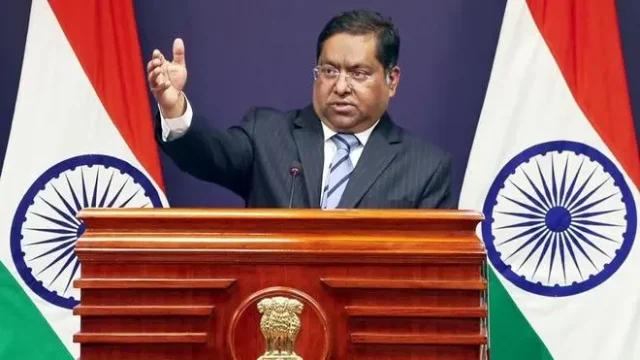
INDIA’S External Affairs Ministry today informed that External Affairs Minister Dr S. Jaishankar held several rounds of talks with his Iranian counterpart Seyed Abbas Araghchi and discussed issues pertaining to the safety of shipping and India’s energy security. Briefing media in New Delhi, External Affairs Ministry spokesperson Randhir Jaiswal said that both Ministers have held three conversations in the last few days.
Jaiswal also briefed reporters about the welfare of Indian nationals in Iran. According to him, around 9,000 Indians are currently residing in the country. The Government of India has relocated several citizens from Tehran to relatively safer areas and is assisting those wishing to leave the country. Arrangements are being facilitated for travel through neighbouring Azerbaijan and Armenia, allowing Indians to cross land borders and take commercial flights home.
The spokesperson further said Prime Minister Narendra Modi has spoken with several leaders from the Gulf region since the conflict began. During these conversations, the Prime Minister emphasised the need for dialogue and diplomacy to ease tensions and restore peace at the earliest. Jaiswal also highlighted India’s concern over civilian safety and stressed the importance of preventing civilian casualties.
Responding to a question regarding fuel supplies to Bangladesh, the spokesperson noted that India remains a major exporter of refined petroleum products to neighbouring countries. He said Bangladesh has recently requested diesel supplies, and the request is currently under consideration.
India has been supplying diesel to Bangladesh since 2007 from the Numaligarh Refinery in Assam through multiple channels, including waterways, rail transport, and later via the India-Bangladesh Friendship Pipeline. In October 2017, Numaligarh Refinery and the Bangladesh Petroleum Corporation signed a sale-purchase agreement for the supply of high-speed diesel under mutually agreed terms.
Jaiswal said that while diesel exports to Bangladesh have largely continued over the years, any future decisions will take into account India’s refining capacity, domestic demand, and overall fuel availability.
He added that similar fuel supply requests have also been received from other regional partners, including Sri Lanka and Maldives, and these are being examined in line with India’s own energy requirements.
Replying to another question, the spokesperson said Foreign Secretary Vikram Misri signed the condolence book at the Iranian Embassy in New Delhi on behalf of the Government of India. He noted that Misri did so on March 5, the first day the condolence book was opened.
On a Gulf Cooperation Council-backed resolution at the United Nations Security Council, Jaiswal said India has co-sponsored the initiative along with 135 other countries. He noted that the resolution reflects several of India’s longstanding positions and emphasised that the welfare of the large Indian diaspora in Gulf countries remains a key priority. The Gulf region also continues to be crucial for India’s energy security.
Responding to a statement from Pakistan regarding the India–Canada agreement, the spokesperson rejected Islamabad’s remarks. He asserted that India’s non-proliferation credentials are well recognised internationally and said a country with a documented record of clandestine nuclear proliferation cannot credibly comment on export control or proliferation issues. He described Pakistan’s remarks as an attempt to divert attention from its own track record.