
Last Updated on July 3, 2026 2:28 pm by BIZNAMA NEWS
By Asad Mirza
Long before he was launching high-tech satellites into space, Awais Ahmed was just a curious kid living in a quiet village in Karnataka. Growing up without a smartphone or internet access, he spent his nights reading encyclopedias by candlelight, fascinated by pictures of far-off galaxies. Fast forward to today, and that boy from Aldur has turned his childhood obsession into a massive ₹900 crore space-tech empire called Pixxel—with major backing from both Google and NASA.
The Cosmic Spark
That untamed curiosity followed him to BITS Pilani, where he chose to study Mathematics. Ahmed didn’t just stick to the lecture halls; he threw himself into practical, hands-on engineering. He joined Team Anant, a student satellite project collaborating directly with India’s space agency, ISRO. Soon after, he became the engineering lead for Hyperloop India, building a prototype pod that reached the finals of the SpaceX Hyperloop Pod Competition in California. That taste of high-stakes, commercial space innovation sealed his fate.
Spotting a Multi-Million-Dollar Blindspot
The pivot to entrepreneurship happened almost by accident. In 2018, while competing in the IBM Watson AI Challenge, Ahmed and his classmate Kshitij Khandelwal tried to build an AI model to monitor global crop health. They hit a wall: the existing satellite imagery was frustratingly blurry. Traditional Earth-observation satellites could only capture basic visual data, completely missing micro-level changes like early crop stress, subterranean methane leaks, or subtle toxic runoffs.
Rather than waiting for the industry to catch up, the duo decided to build their own solution. In February 2019, while still in their early twenties and finishing their degrees, they launched Pixxel. Operating on a shoestring budget of roughly Rs 10,000 a month with capital borrowed from Ahmed’s father, they set out to build a “health monitor for the planet.”
Reaching for the Stars
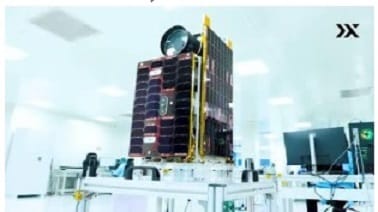
Fast forward to today, and Pixxel is a global titan in hyperspectral imaging – a specialised technology that analyses hundreds of narrow wavelengths across the electromagnetic spectrum to reveal chemical signatures invisible to the human eye. In 2025, Pixxel successfully deployed its Firefly constellation of six advanced satellites, capturing data across more than 250 spectral bands.
The global space sector took notice. Pixxel made history as the first Indian space startup to land a coveted contract with NASA, followed by a robust five-year agreement with the US National Reconnaissance Office. To fuel this explosive growth, Ahmed has raised an astonishing $95 million (nearly Rs 900 crore) from premier global investors, including Google, Lightspeed Venture Partners, and Radical Ventures.
Splitting his time between bustling headquarters in Bengaluru and Los Angeles, Ahmed’s meteoric rise has earned him slots on prestigious lists like Forbes 30 Under 30 and MIT Innovators Under 35. Yet, at his core, the young CEO remains the book-loving village boy who looked up at the night sky and refused to let earthbound boundaries limit his dreams.
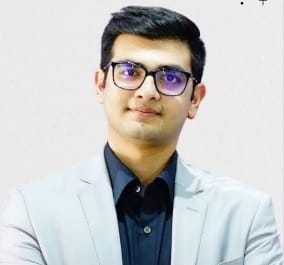
Photos: Awais Ahmed, Founder and CEO of Pixxel. Source: Our Future Agenda
Pixxel’s Firefly hyperspectral satellite constellation. Source: Pixxel