
Last Updated on June 28, 2026 12:42 am by BIZNAMA NEWS
Staff Reporter / New Delhi
On the eve of National Doctors’ Day, Union Science and Technology Minister Dr Jitendra Singh spotlighted India’s growing leadership in cutting-edge biomedical research, announcing that the Genome India Mission has already completed genome sequencing of more than 10,000 individuals. The initiative, he said, is steadily advancing towards building one of the world’s largest and most diverse genomic databases — a resource that promises to transform healthcare delivery in the coming decades.
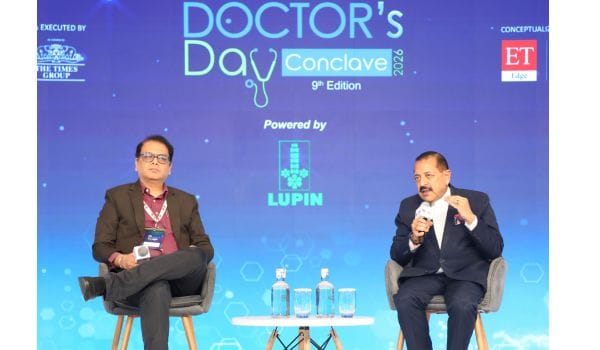
Addressing a special Doctors’ Day Conclave, Dr Singh described how India’s unique genetic diversity, combined with its expanding scientific ecosystem and adoption of emerging technologies, is driving a new era of affordable, patient-centric healthcare. “We are entering a transformative phase,” he remarked, “where treatment will increasingly be tailored to an individual’s genetic profile, lifestyle, and environmental factors.”
Precision Medicine and Indigenous Innovation
The Minister underscored India’s progress in developing homegrown solutions to global health challenges. From gene therapy to nuclear medicine, Indian researchers are pushing boundaries in areas that promise to redefine disease management. He cited the successful demonstration of gene therapy for haemophilia as a landmark achievement, noting that such breakthroughs pave the way for precision medicine — enabling accurate diagnosis, targeted therapies, and improved patient outcomes.
Dr Singh emphasized that India is no longer content with being a manufacturing hub for medicines. Instead, the country is transitioning towards drug discovery and innovation, supported by initiatives such as the BioE3 Policy and the Bio-RIDE Mission. These programs, he explained, are designed to foster indigenous research, encourage biotechnology startups, and strengthen India’s position in the global pharmaceutical landscape.
The Role of Artificial Intelligence
Highlighting the role of Artificial Intelligence (AI), Dr Singh said that AI is accelerating advancements across multiple domains — from genome sequencing and biomedical research to disease diagnosis, telemedicine, and medical education. By improving data analysis and clinical decision-making, AI is helping doctors and researchers unlock new insights and deliver more effective treatments.
“AI is not just a tool for efficiency,” he noted, “it is becoming a partner in discovery, enabling us to analyze vast datasets, predict disease patterns, and personalize healthcare in ways that were unimaginable a decade ago.”
India’s Global Health Contribution
Dr Singh also pointed out that India’s efforts are not limited to domestic healthcare needs. By leveraging its scientific talent and technological capabilities, the country is steadily developing solutions that address global health challenges. Gene medicine, nuclear medicine, and precision therapies, he said, are areas where India is poised to make significant contributions to international medical research and practice.
He concluded by paying tribute to doctors across the nation, acknowledging their role as frontline innovators and caregivers. “On Doctors’ Day, it is fitting that we celebrate not only their service but also the scientific strides that will empower them to deliver better care in the future,” Dr Singh said.