Last Updated on March 31, 2026 12:21 pm by BIZNAMA NEWS
If Bab el-Mandeb Closes, the Global Economy Will Feel the Shock
Asad Mirza
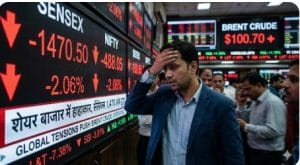
The war against Iran has threatened global supplies of oil and natural gas, sparked fertiliser shortages and disrupted air travel. Iran’s grip on the strategic Strait of Hormuz has shaken markets and prices. The United States and Israel continue to strike Iran, whose retaliatory attacks have targeted Israel and neighboring Gulf Arab states. More than 3,000 people have been killed. In this backdrop, the entry of Iranian-backed Houthi rebels the war, has increased concern regarding shutting down of another passage for oil tankers, through Bab el-Mandeb.
After Yemen’s Houthi rebels escalated their involvement in the conflict, with two missiles fired toward Israel, international concerns continue to grow about the supply of oil to the world. The developments raise fresh fears that the group could again threaten Red Sea shipping routes, a vital global trade corridor, further increasing tensions across an already volatile regional conflict.
Abdul Malik al-Houthi, leader of the militant group, said on March 26, “As the people of Yemen, we repay loyalty with loyalty.” He did not specify what kind of military action his movement might undertake. “Our position is clear and explicit against America and Israel, and we harbour no hostile intentions toward any Muslim country,” he said, in an apparent reference to countries in the Gulf.
The more critical issue regarding their involvement is whether they will attempt to disrupt shipping in the Bab el-Mandeb Strait, effectively undermining Saudi Arabia’s efforts to bypass the Strait of Hormuz via its East-West oil pipeline.
To date, no activities by the Houthis in the Bab el-Mandeb Strait have been observed. However, this does not guarantee such incidents will not occur in the future. Currently, tankers continue to traverse the strait.
The Houthis’ entry could further hurt global shipping if they again target vessels in the Bab el-Mandeb Strait off the Red Sea, through which about 12% of the world’s trade typically passes. If the Houthis increase attacks on commercial shipping, as they have in the past, it would further push up oil prices and destabilise maritime security.
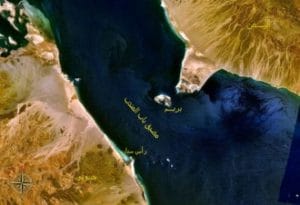
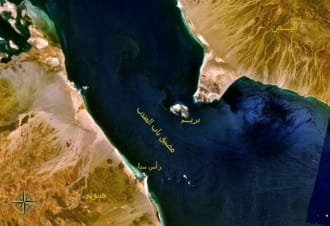
The Bab el-Mandeb, at the southern tip of the Arabian Peninsula, is crucial for vessels heading to the Suez Canal through the Red Sea. Saudi Arabia has been sending millions of barrels of crude oil a day through it because the Strait of Hormuz is effectively closed.
Houthi rebels attacked more than 100 merchant vessels with missiles and drones, sinking two vessels, between November 2023 and January 2025, saying that it was acting in solidarity with Palestinians in Gaza during the Israel-Hamas war.
The Houthis’ latest involvement would complicate the deployment of the USS Gerald R Ford, the aircraft carrier that arrived in Croatia on March 28 for maintenance. Sending it to the Red Sea could draw attacks similar to those on the USS Dwight D Eisenhower in 2024 and the USS Harry S Truman in 2025.
Known in Arabic as the ‘Gate of Tears’, analysts warn this narrow waterway could soon live up to its name — not just for the region, but for the global economy.
One of the busiest shipping lanes in the world, the Strait of Bab al-Mandeb is another critical artery in the global economy. At just 30 kilometres wide, the narrow waterway acts as a key link between Europe and Asia for oil tankers and cargo ships.
Vessels arriving from the Indian Ocean pass through it to reach the Red Sea and then the Suez Canal — one of the fastest routes between the two continents. Before the Iran war, roughly 12 per cent of the world’s oil shipments passed through Bab el-Mandeb, according to the US Energy Information Administration (EIA).
As for Mandeb, the Gate of Tears, it’s the route that knits together the oil economies of the Gulf region with the markets of Europe and Asia. In the Red Sea, oil tankers from Saudi Arabia’s port of Yanbu make their way towards European refineries via the Suez Canal, up north.
In turn, supplies of products from Europe travel down via the Suez, into the Red Sea, and then through the Mandab route to the rest of the world in the south. That is likely to be affected.
Some oil flows are already being redirected, increasing traffic through the Red Sea as exporters look for alternatives.
“We’re talking about three to four tankers more per day, which is still a notable difference,” Rico Luman, a transport economist at ING bank, told AFP.
Military bases operated by the United States, France and China sit just across the water in Djibouti, underscoring the corridor’s strategic importance.
Now, with Iran formalising its chokehold on the Strait of Hormuz, the pressure on this southern route is growing.
A simultaneous disruption of both the Hormuz Strait and Bab al-Mandab could significantly intensify pressure on oil markets, even hasten an end to the war.
If the Houthis were to block Mandeb, they mostly disrupt Saudi Arabia’s ability to bypass Hormuz for oil shipments. Some ocean carriers are already opting for the far longer voyage around the tip of Africa, reports said. But this does not mean a total halt to shipping; it could just badly squeeze supplies and drive prices further up.
—–