
Last Updated on July 15, 2026 3:25 pm by BIZNAMA NEWS

T N ASHOK
India and the United Kingdom have entered into a new phase of economic cooperation with the Comprehensive Economic and Trade Agreement (CETA) and the Agreement on Social Security Contributions, also known as the Double Contribution Convention (DCC), coming into force today, July 15. The twin agreements mark a major milestone in India’s global economic engagement and are expected to significantly boost bilateral trade, investment, services exports and professional mobility while strengthening the strategic partnership between the two countries.
The implementation of the agreements follows the successful completion of all internal procedures and ratifications by both governments. Aligned with India’s vision of Viksit Bharat 2047, the agreements operationalise a comprehensive economic framework designed to translate policy commitments into day-to-day commercial engagement with one of India’s key global partners.
CETA provides zero-duty access for nearly 99 per cent of India’s exports to the United Kingdom, covering almost 100 per cent of the country’s trade value with Britain. Simultaneously, the Agreement on Social Security Contributions has come into effect, increasing the exemption period for Indian professionals from double social security contributions from three years to five years, a move expected to significantly benefit Indian workers on temporary assignments in the UK.
The journey towards this landmark agreement began in May 2021 with the launch of the India-UK Enhanced Trade Partnership and the adoption of the India-UK Roadmap 2030. The roadmap envisioned elevating bilateral ties into a Comprehensive Strategic Partnership while setting an ambitious target of doubling bilateral trade to USD 100 billion by 2030.
Following fourteen rounds of intensive negotiations, CETA was concluded on May 6, 2025. The agreement was formally signed on July 24, 2025, in London by India’s Union Minister of Commerce and Industry, Piyush Goyal, and the United Kingdom’s Secretary of State for Business and Trade, Jonathan Reynolds, in the presence of Prime Minister Narendra Modi and British Prime Minister Sir Keir Starmer. To complete the overall framework, the companion Double Contribution Convention was signed on February 10, 2026.
Describing the agreement as a landmark achievement in India’s economic diplomacy, Union Commerce and Industry Minister Piyush Goyal said the simultaneous implementation of CETA and the Double Contribution Convention would create significant new opportunities for Indian exports.
He said that by securing immediate duty-free access on 99 per cent of India’s tariff lines, the agreement removes long-standing tariff barriers and enables sectors such as textiles, leather, marine products, engineering goods and processed foods to compete in the UK market without any tariff disadvantage.
The minister also emphasised that while the agreement aggressively expands India’s commercial footprint, it simultaneously protects domestic interests. He noted that stringent exclusion lists have been incorporated to shield sensitive agricultural and rural sectors from import volatility, while the exemption from double social security contributions safeguards the financial interests of Indian professionals working temporarily in the United Kingdom.
Comprising 30 chapters, the Comprehensive Economic and Trade Agreement establishes a next-generation trade architecture that extends far beyond conventional tariff reductions. It modernises bilateral economic engagement by integrating traditional trade in goods and services with emerging areas such as digital trade, telecommunications, financial services, intellectual property and, for the first time in a bilateral agreement, government procurement. The agreement also includes dedicated chapters on innovation, small and medium enterprises, sustainability and transparency, creating a modern, rules-based framework aimed at strengthening supply chains, promoting technological collaboration and supporting India’s long-term economic diplomacy.
The operationalisation of CETA and the Double Contribution Convention is expected to bring about a structural transformation in India’s trade architecture by leveraging the country’s manufacturing strength, service capabilities and grassroots production network to gain deeper access to one of the world’s leading consumer markets.
A major benefit of the agreement is the complete elimination of UK import tariffs across a wide range of Indian export sectors. Tariffs of up to 70 per cent on processed food products, up to 21.5 per cent on marine products, up to 18 per cent on engineering goods and auto components, up to 16 per cent on leather and footwear products, up to 12 per cent on textiles and clothing, and up to 8 per cent on chemicals and pharmaceutical products will now be reduced to zero.
The government expects this immediate duty-free market access to significantly improve the competitiveness of Indian exports, generate fresh opportunities for farmers, fishermen, workers, MSMEs and manufacturers, and strengthen India’s integration into global value chains. The agreement also enables traditional artisans, manufacturing enterprises and industrial clusters across the country to compete on equal terms in the British market from the very first day of implementation.
At the same time, India has protected several sensitive sectors from tariff liberalisation, including dairy products, cereals, millets, edible oils, oilseeds, apples and a range of vegetable products, thereby safeguarding domestic agricultural interests.
The services sector also stands to gain substantially under the agreement. The United Kingdom has offered one of its most comprehensive services commitments ever, covering all major services sectors and 137 sub-sectors of export interest to India.
Indian service providers engaged in information technology and IT-enabled services, financial services, professional services, healthcare, education, engineering, telecommunications and consultancy services are expected to benefit from improved market access and greater regulatory certainty.
The agreement further provides predictable mobility pathways for business visitors, intra-corporate transferees, contractual service suppliers, independent professionals and investors, making cross-border movement more structured and transparent.
In a first-of-its-kind arrangement, the agreement also creates dedicated annual mobility opportunities for 1,800 Indian chefs, yoga instructors and classical musicians, opening new avenues for skilled Indian professionals in the UK.
The Agreement on Social Security Contributions represents another major breakthrough in bilateral cooperation. The agreement exempts Indian workers and their employers from making dual social security contributions in the United Kingdom during temporary assignments. More significantly, the exemption period has been extended from three years to five years.
The government estimates that the agreement will benefit more than 75,000 Indian professionals and over 900 companies by supporting workforce mobility while ensuring continuity of social security benefits. It is also expected to strengthen India-UK collaboration in the services sector by leveraging the high-skilled workforce and innovative service capabilities of both countries.
The agreements also address concerns relating to steel exports. Demonstrating close cooperation under the India-UK Comprehensive Economic Partnership, both governments have reached a consensus to safeguard bilateral steel trade following the UK’s steel measures that came into effect on July 1, 2026.
According to the government, 85 per cent of India’s steel exports remain outside the scope of the UK steel measures. For the remaining product lines covered by the measures, India’s interests have been protected through a combination of country-specific quotas, residual quotas and access under the Authorised Use Scheme. The arrangement is intended to minimise market disruptions while maintaining a balanced and stable trading environment for exporters.
The government has described CETA as a people-centric trade agreement designed to deliver benefits across all sections of society. Farmers are expected to gain access to premium export markets, fisherfolk will benefit from increased seafood exports, workers will find new employment opportunities in labour-intensive industries, while women entrepreneurs, youth, startups and MSMEs are expected to secure greater participation in global value chains. Professionals, meanwhile, will benefit from enhanced mobility and wider recognition of their services.
With the implementation of the Comprehensive Economic and Trade Agreement and the Double Contribution Convention, India and the United Kingdom have established a comprehensive economic architecture that deepens their strategic partnership while creating new opportunities in trade, investment, innovation and services. According to the government, the agreements strengthen India’s journey towards becoming a globally integrated, resilient and competitive economy, while reinforcing the country’s long-term vision of building an inclusive, prosperous and self-reliant Viksit Bharat 2047.
The new framework is expected to help both countries navigate the changing landscape of global commerce while laying the foundation for sustained economic growth, expanded bilateral cooperation and shared prosperity in the years ahead.
India-UK CETA creates unprecedented opportunities for key sectors: Union Minister Piyush Goyal
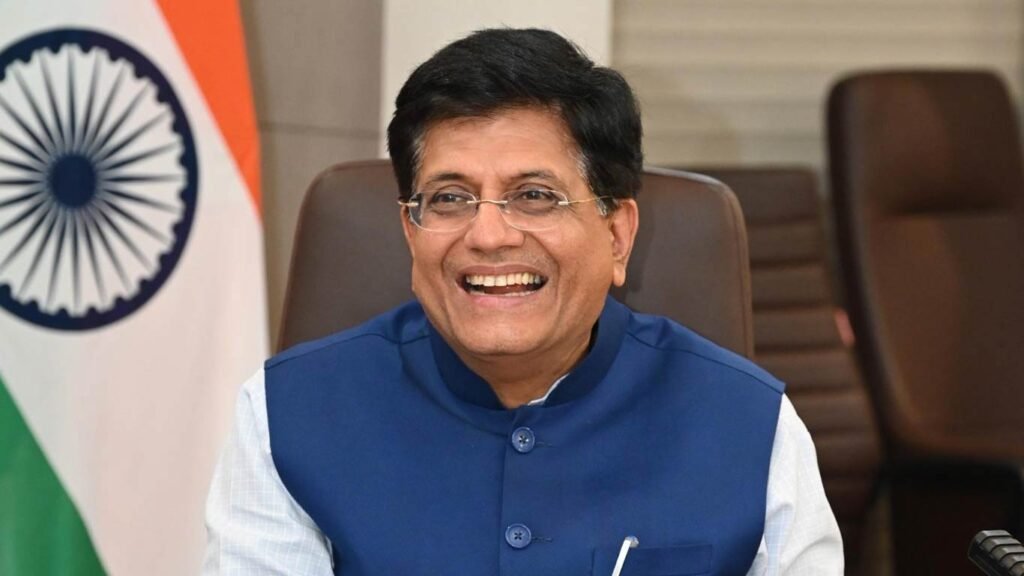
Union Commerce and Industry Minister Piyush Goyal has described today as a defining milestone in India-UK relations. In a social media post, Mr Goyal said that the India-UK Comprehensive Economic and Trade Agreement (CETA) and the Agreement on Social Security have come into force, providing zero-duty market access for nearly 99 per cent of India’s exports and covering almost 100 per cent of the bilateral trade value.
The minister said the India-UK Free Trade Agreement will create unprecedented opportunities for India’s textiles, leather, gems and jewellery, engineering goods, marine products, chemicals, processed foods, MSMEs, farmers and manufacturers. He added that the agreement also opens new avenues for the country’s IT, professional, financial, education and business services sectors, while enhancing mobility for Indian talent.
Mr Goyal said the Agreement on Social Security further strengthens the partnership by exempting Indian professionals on temporary assignments in the UK from double social security contributions for up to five years, thereby enhancing the global competitiveness of India’s workforce.
The minister added that India and the UK remain committed to building a resilient, innovation-driven partnership that will promote growth, investment and shared prosperity for generations to come.